
Repair Hub · Phoenix Metro
Ceiling Texture Repaired So the Patch Disappears Overhead
Knockdown, orange peel, and popcorn ceilings blended back into the original, in homes and buildings across the Phoenix metro.
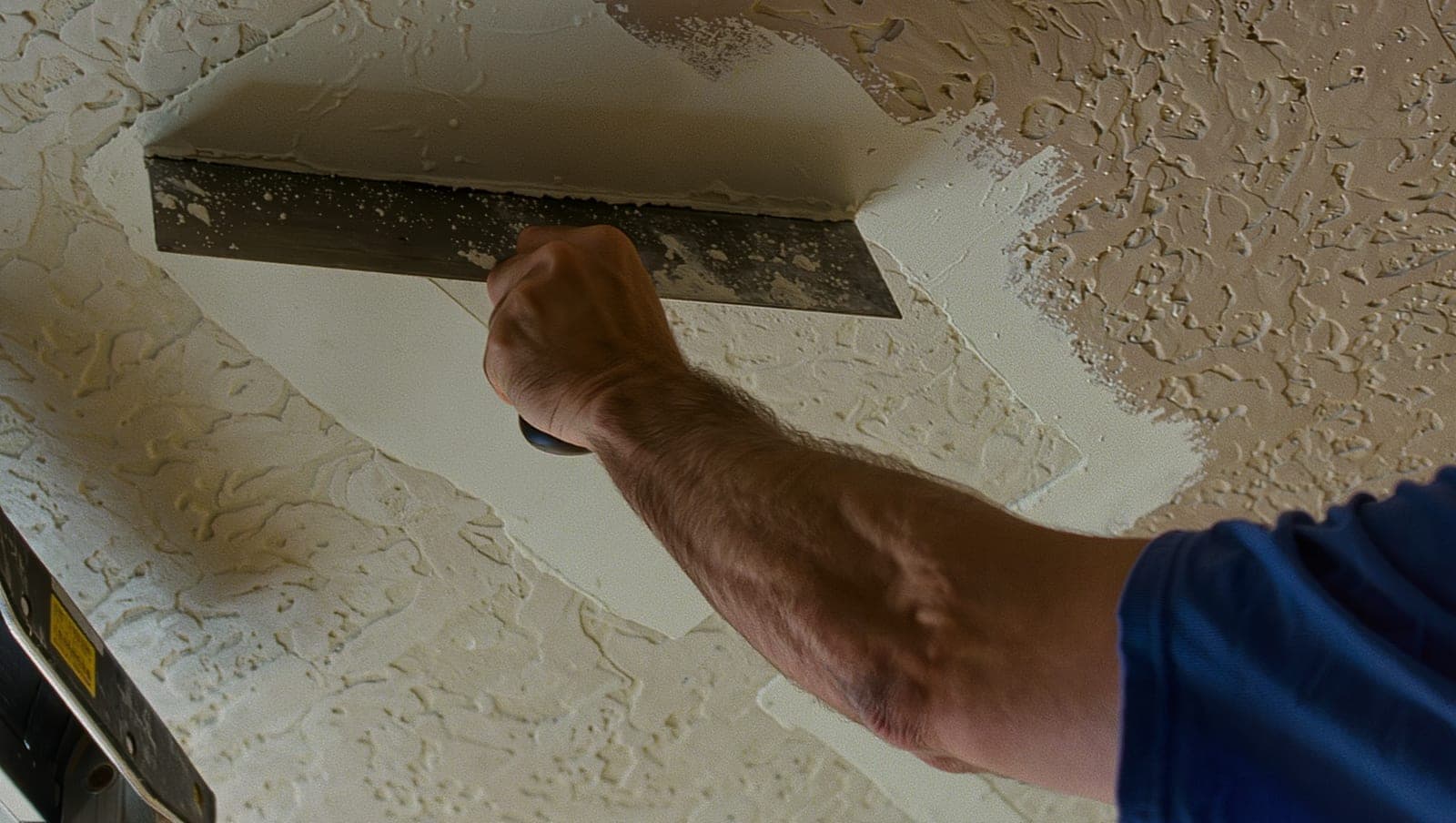
Ceiling texture is a thin skin of joint compound sprayed or troweled over the drywall and left to dry in a pattern. In the Valley that pattern is usually knockdown or orange peel, and in houses built before about 1980 it is often popcorn, a heavier acoustic mix with a foam or vermiculite aggregate. The texture exists to hide seams, screws, and the unevenness of a ceiling under raking light. It fails for local reasons. A monsoon roof leak or an overflowing AC condensate pan in the attic wets the compound, and popcorn in particular drinks water and lets go of the board. Attic heat that can pass 130 degrees in July bakes old texture brittle. Trusses lift and drop with the seasons and crack the texture along tape lines. An electrician cuts in a can light, or a plumber opens the ceiling under an upstairs shower, and the hole is closed by someone who did not own a hopper gun.
A ceiling is the hardest surface in a house to hide a repair on. Light comes across it sideways from the windows, and sideways light turns every ridge into a shadow line. A wall patch that is slightly proud can pass. A ceiling patch that is slightly proud announces itself from the doorway, and it keeps announcing itself every afternoon at about four o'clock. The pattern has to match in scale, the edges have to feather to nothing, and the paint has to go corner to corner or the sheen will tell on you.
Bleuwave Handyman repairs ceiling texture the way it was applied in the first place. We find out why it failed before we touch it, because texture over a live leak is money spent twice. We remove what is loose, skim and feather the patch with setting-type compound, seal any stain with a primer-sealer, and then spray a test pass on a scrap board until the splatter matches the original. Knockdown gets knocked down at the right minute. Orange peel gets the right nozzle and pressure. Popcorn gets the right aggregate mix. Then the ceiling is primed and painted flat, usually the whole ceiling, so there is no line where new meets old.
For property managers and maintenance teams, ceiling texture is the repair that most often gets deferred and most often gets noticed at the walkthrough. A stained, flaking bedroom ceiling reads as neglect to a prospective tenant even when the leak was fixed months ago. We handle ceiling texture as part of unit turns and work orders, we schedule around occupancy, and we bring the same finish standard to a two-bedroom in Mesa as to a Paradise Valley great room.
Ceilings do not heal. Texture that is flaking keeps flaking, and a stain that was one ring in June is a soft, spreading patch by September. Estimates are free, and the crew can usually see it this week.
Signs you need ceiling texture
- A brown or yellow ring on the ceiling, even a dry one, under a bathroom, an AC air handler, or a roof valley.
- Popcorn or knockdown texture flaking, sagging, or dropping crumbs onto the floor.
- A hairline crack running straight along a tape seam, often the full width of the room, that opens in summer and closes in winter.
- A previous patch that is visibly smoother, coarser, or shinier than the rest of the ceiling in afternoon light.
- Bare compound or a flat gray square where a light fixture, fan, or attic access was moved.
- Texture that has bubbled or blistered, which usually means moisture got behind the paint.
How the repair is done
- 1
Find the cause and confirm the ceiling is dry
Before any compound goes up we read the area with a pin moisture meter and look above it: attic, roof deck, condensate line, the tub drain upstairs. A ceiling that reads wet does not get textured. If the source is a plumbing or HVAC problem, the licensed plumbing and HVAC companies in the Bleuwave family fix it. We handle the ceiling after.
- 2
Remove the failed texture and prep the edges
Loose knockdown and orange peel are scraped back to a sound edge with a wide taping knife. Popcorn is misted and wet-scraped so it comes off in sheets instead of dust. A soft or crumbling section of board is cut out with an oscillating tool along the joist lines. Stains are sealed with a shellac- or oil-based primer-sealer so they cannot bleed through the new work. On homes built before about 1980 we recommend a lab test of popcorn before it is disturbed, because older acoustic texture can contain asbestos.
- 3
Patch, tape, and skim
Missing board is replaced with 5/8-inch drywall when the original is 5/8, and 1/2-inch when it is 1/2. Seams are paper-taped and set with setting-type compound, which cures hard and does not shrink, then skimmed with topping compound and feathered 8 to 12 inches past the repair. The goal is a surface that is flat under a raking flashlight before any texture goes on.
- 4
Match the texture on a test board first
We load a texture hopper with compound thinned to match the original, dial in the nozzle and air pressure, and spray a scrap of drywall or cardboard until the splatter size matches. Orange peel is sprayed and left. Knockdown is sprayed heavier, allowed to set for 10 to 20 minutes depending on how dry the air is that day, then flattened with a knockdown knife at a low angle. Popcorn is mixed with aggregate and sprayed through a wider orifice. Only after the test passes do we spray the ceiling, extending past the patch edges and lightening the pass as we go.
- 5
Prime and paint corner to corner
New texture is porous and drinks paint unevenly, so it gets a coat of primer before finish paint. Because ceiling paint flattens and yellows over the years, we usually paint the whole ceiling in flat white rather than trying to blend a square. The room is masked, the floor is covered, and the dust is controlled while all of this happens over your head.
What it costs in Phoenix
In the Phoenix market, a small ceiling texture repair with no board replacement, the kind that follows a light fixture move or a dry water ring, tends to land in the low hundreds of dollars. A larger area that needs a cutout, new board, texture, and a full ceiling repaint typically runs from the mid hundreds into the low four figures, driven more by ceiling height, square footage, and paint than by the patch itself. Popcorn work is priced separately and depends on whether you want it repaired or removed, and on whether testing is needed first. These are ballparks, not a price list. The only number that means anything is the one written for your ceiling, and that estimate is free.
Do it yourself, or call someone?
Honest answer: a small orange peel patch on a ceiling is within reach of a patient homeowner with an aerosol texture can, a stepladder, and a willingness to paint the whole ceiling afterward. Knockdown is harder, because the window between sprayed and too dry to knock down is short, and shorter still in a Phoenix summer, and a knockdown patch flattened too late looks like a small mountain range. Popcorn is harder again, and it should not be scraped at all in an older home until it has been tested. Add the fact that everything drips onto your face and your furniture, and most people decide their weekend is worth more than the repair costs.
Can a handyman repair drywall? The honest answerWhat is included
- Knockdown, orange peel, splatter, and popcorn ceiling texture repair
- Water stain sealing with primer-sealer before any texture or paint
- Cutout and replacement of soft or sagging ceiling board, 1/2-inch or 5/8-inch
- Tape-seam and truss-crack repair along ceiling joints
- Texture blending after can lights, fans, and attic access changes
- Popcorn ceiling repair, or full removal and re-texture on request
- Full ceiling prime and paint so there is no visible blend line
- Masking, floor protection, and dust control in occupied homes and units
Why Phoenix calls Bleuwave
- We diagnose the leak before the texture. Licensed plumbing and HVAC in the Bleuwave family means the condensate line or the shower drain gets fixed properly, not just the ceiling under it.
- Every texture pass is tested on a scrap board first. The ceiling is not where we find out the nozzle was wrong.
- Setting-type compound and paper tape on every seam repair, because a ceiling crack fixed with spackle comes back by the next monsoon.
- One crew from cutout through paint. No handoff between a drywall subcontractor and a painter who never saw the patch.
- Same-day, next-day, and after-hours scheduling across a 35-mile radius of Phoenix, including turns and work orders.
- Licensed, insured, and bonded, Veteran Owned & Operated since 2022, with free estimates on every ceiling.
Questions Phoenix homeowners ask
Can you match knockdown ceiling texture so the repair does not show?
Yes, and it is the standard we work to. Knockdown is matched by controlling three things: how heavy the splatter is sprayed, how long it sets before the knife, and how much pressure is on the knife. We test all three on scrap before we spray the ceiling, and we feather the new texture into the old rather than stopping at a hard edge. The last step, painting the whole ceiling, is what makes it truly disappear.
Do I have to repaint the entire ceiling after a texture repair?
Usually, and we recommend it. Ceiling paint ages, and a fresh square of flat white on a five-year-old ceiling shows even when the texture is perfect. On a small closet or hallway ceiling the difference is minor. On a living room with windows on two sides, paint the whole thing.
Can you just paint over the water stain on my ceiling?
Only once the leak is fixed and the board reads dry on a moisture meter. Then the stain gets a shellac- or oil-based primer-sealer, because ordinary paint will let it bleed back through within a few months. If the texture around the stain is soft or flaking, it has to come off first. A stain painted over while the ceiling is still damp is a stain you will pay to fix twice.
Should I repair my popcorn ceiling or remove it?
If the damage is a small area and the rest of the ceiling is sound, repair is cheaper and faster. If it is stained in several places, flaking broadly, or you simply want it gone, removal and re-texture in knockdown or orange peel is a bigger job but a permanent one. In a home built before about 1980, have the popcorn tested for asbestos before anyone scrapes it. We will tell you which way the numbers point on your ceiling.
How long does a ceiling texture repair take?
A small texture-only blend can be sprayed, dried, and painted in one visit on a dry day. A repair that needs new board and tape takes two or three short visits, because setting-type compound needs to cure and the texture needs to dry before primer. In summer here things dry fast. In a humid August week they do not.
Why does my ceiling crack along the same line every year?
That is almost always a tape seam over a joist or truss line. Roof trusses in Phoenix lift slightly in the cooler, damper months and drop in the heat, and the seam that carries that movement cracks the texture. The fix is to open the seam, re-tape it with paper tape set in setting-type compound, and re-texture. Filling it with caulk or spackle is why it comes back.
Related repairs
Guides worth ten minutes
Guide · 7 min read
How Long Does Drywall Patching Take?
A small patch is a same-day job. A proper mid-size repair is two visits, and the gap between them is not idleness. Here is the realistic timeline, and what Phoenix heat does to it.
Guide · 8 min read
Can a Handyman Repair Drywall?
Drywall repair is the job handymen do most and do best. The better question is where the line falls, and how to know whether the person you hired is on the right side of it.
Elsewhere on the site
Related services, nearby city pages, and reading that pairs with this repair.
Looking for the service page? See how we handle this as a scheduled service, or browse all services.
Stop looking up at it. Get a free estimate on your ceiling.
Licensed, insured & bonded · Veteran Owned & Operated since 2022 · Serving 35 miles around Phoenix.