
Diagnosis · Phoenix Metro
Why is my ceiling cracking?
Short answer
A ceiling cracks when the trusses above it move, when a taped seam releases, or when water has weakened the board. In Phoenix the most common cause is truss uplift, which opens a crack along the top of the wall or in a ceiling corner every dry season. A straight crack across the room is usually a failed seam, while a crack with a stain or a bow beside it is a leak, and that one is not cosmetic.
Medium urgencyA dry, stable ceiling crack at the wall line or along a seam is a scheduled repair, not a same-day one. It becomes urgent the moment it has a stain, a belly, blistering paint, or a damp feel near it. A ceiling that is cracking because it is wet can also be a ceiling that is about to sag, and wet drywall does not give much warning between the two.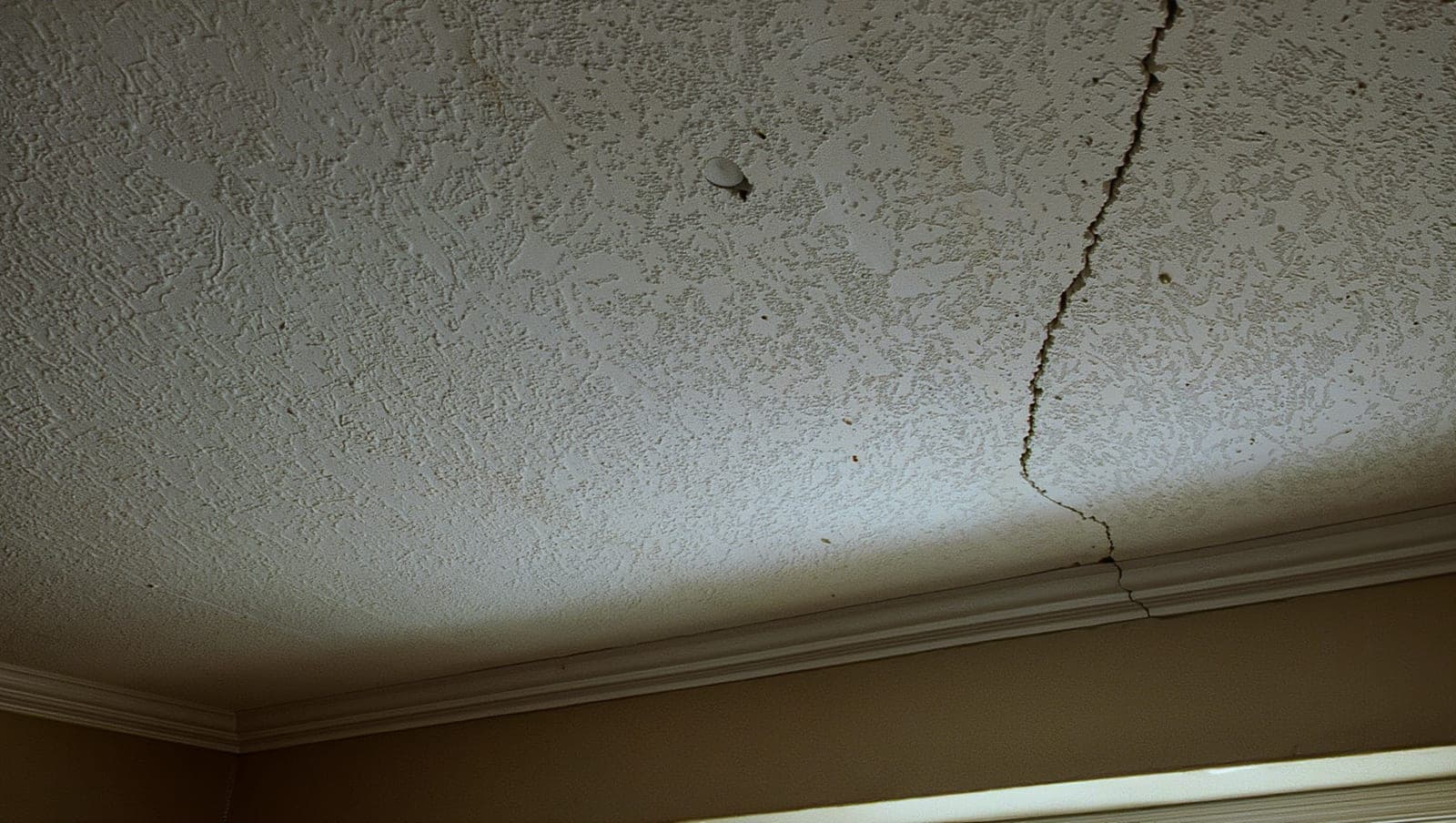
Ceilings crack for the same reasons walls do, with two differences that change the diagnosis. The first is that a ceiling hangs from the roof structure, so it feels every movement of the trusses directly, and in Phoenix the trusses move more than most homeowners realize. The second is that a ceiling has an attic above it, and an attic here holds the roof, the insulation, the air handler, and on a two-story house the plumbing for the floor above. Every one of those can put water on the back of the drywall without any sign in the room below until the crack appears.
That is why a ceiling crack should be read with more attention than the same crack on a wall. Most are ordinary. A truss lifting in a dry attic opens the joint at the top of the wall on schedule and closes it again in the fall. A seam taped thin releases and prints a straight line across the room. A newer house shrinks through its second summer and the ceiling seams open with the wall seams. Those are drywall repairs, and none of them is a reason to lose sleep.
The minority worth attention are the cracks with company. A tan edge along the crack, a slight belly in the board between two trusses, texture that has begun to flake nearby, or a musty smell in the room are all signs that the crack is the visible end of a water problem that began in the attic. The checks on this page are built to find that distinction quickly, because a ceiling that is cracking and sagging is on a schedule of its own.
Likely causes, ranked
- 1
Truss uplift
most commonRoof trusses are assembled from lumber that lives in two climates at once. The top chords sit in an attic that runs past 120 degrees on a summer afternoon while the bottom chords are buried in insulation, and the moisture difference makes the truss arch upward in the dry months. The ceiling drywall, fastened to the bottom chord, lifts with it and separates from the interior walls, which are fastened to the slab and do not move. Look for a crack at the joint between ceiling and wall, in a ceiling corner, or running parallel to an interior wall a foot or two out from it, worst on walls near the middle of the house. It is widest in late spring and nearly closed by winter. It is a movement, not a failure, and it is repaired by hiding the movement.
- 2
A failed ceiling seam
commonCeiling board is hung in four-foot-wide sheets, and every long seam between them was taped by someone working overhead, often quickly. Tape bedded thin, or compound that skinned before the tape went in, releases under the ordinary flexing of the trusses. The crack is dead straight, runs parallel to the trusses or across them at a four-foot interval, and often shows as a slight raised band under a flashlight held flat against the ceiling. It may run the full length of the room. If the crack has a thin blister beside it rather than a clean line, the tape has lifted and will need to be replaced rather than covered.
- 3
Settling and framing shrinkage
commonThe same movement that cracks walls reaches the ceiling, particularly in a house under three years old or one that has just been through a very wet monsoon. These cracks appear at seams and at the corners of ceiling openings, such as around a skylight, a recessed light, or the attic hatch, and they arrive alongside wall cracks and nail pops in the same room. They tend to appear once, hold still, and stay hairline. If the ceiling cracks in the room match the wall cracks in age and character, they are part of the same ordinary event.
- 4
Water from above
less commonWet gypsum loses its stiffness, swells, and cracks the compound around it as it dries. In Phoenix the water comes from three places: a roof that failed in a monsoon downpour, an air handler whose condensate line clogged and overflowed the drain pan, or a plumbing fitting on the floor above. This crack is recognized by its neighbors. A tan or yellow edge, a faint ring, a slight sag between trusses, paint that has begun to blister, or texture on the floor all point to water. So does location: a crack below an upstairs bathroom, near the AC closet, or under a roof valley is water until proven otherwise. The crack is the last symptom, not the first.
- 5
Attic load or a fastener that missed
less commonHalf-inch ceiling board screwed to trusses on 24-inch centers has little margin for extra weight or a light fastening pattern. Boxes stored on the drywall between the trusses, a technician who stepped off the joist, or a run of screws that missed the chord will crack the board along a truss line or leave a short crack with a visible dimple at one end. You recognize it by a crack that starts or ends at a single point rather than following a seam, and by a slight step between the two sides that you can feel with a fingertip.
Check it yourself in ten minutes
- 1Stand in the doorway and look at the crack against the light from a window. Note whether it runs along the top of the wall, straight across the room on a seam line, or wanders from a fixture or the attic hatch.
- 2Hold a flashlight flat against the ceiling and shine it along the crack. A raking beam reveals a raised band beside the crack, which means lifted tape, and any belly between trusses, which means the board or its fasteners have weakened.
- 3Look for color. A tan, yellow, or gray edge along any part of the crack, or a faint ring nearby, means water has been through the board. Check the paint on both sides for blistering.
- 4Press gently beside the crack with the end of a broom handle. Sound board pushes back. Give, a soft feel, or a papery crackle means the board has been wet or the tape has released. Do not press hard on anything that sags.
- 5Open the attic hatch and look without stepping off the joists. Wet or compressed insulation, a dark stain on the back of the drywall, a drain pan with standing water, or daylight through the roof deck each explain the crack on their own.
- 6Note the season. Photograph the crack with the date, then look again in a different month. A crack at the ceiling line that is wider in early summer than in winter is truss movement.
The fix
Retape a seam crack, float a truss crack
A straight seam crack is opened, taped in setting compound, and feathered wide across the ceiling. A crack at the ceiling line that moves with the seasons is finished with a floating detail or hidden behind crown molding so the truss can lift without printing a line.
Ceiling Crack Repair
Replace the lifted tape
Where the flashlight shows a raised band and the tape has released, the loose length is cut out and new tape embedded. Compound over lifted tape on a ceiling has the added disadvantage of gravity.
Drywall Seam & Tape Repair
Refasten a ceiling that has begun to belly
A crack that comes with a bow between trusses needs the board drawn back tight to the framing with screws, or cut out and replaced if it has been wet, before any finishing is done. Finishing a crack over a sag is a repair that will be redone.
Sagging Ceiling Repair
Seal and repaint after a leak
When the crack has a stain beside it, the leak is found and stopped first, the board is metered dry, and then the stain is sealed with a shellac or oil-based primer before the crack is repaired and the ceiling is painted. Skipping the primer is why painted-over stains come back.
Ceiling Water Stain Repair
When to stop diagnosing and call
Call the same day if the crack has a belly beside it, if the paint is blistering, if the board feels soft or damp, or if the attic check turned up wet insulation or standing water in a drain pan. A wet ceiling is a leak first and a drywall repair second, and Bleuwave Handyman can meter the board, find the source, and bring in the licensed plumbing or HVAC company in the Bleuwave family when the source is theirs. For a dry, stable crack at the wall line or along a seam, call when you are ready to stop looking at it. The estimate is free, and the answer will include whether the crack is a seam, a truss, or something worth more concern.
More questions on this one
Is a crack between the ceiling and wall a structural problem?
Almost never in a Phoenix house. That joint opens when the roof trusses lift in a dry, hot attic and closes when they settle in the fall. It is the best-known seasonal behavior of truss-framed roofs and it does not affect the structure. The right repair lets the joint move out of sight. A rigid patch there will reopen by next June.
How do I know whether a ceiling crack is from water?
Look for color and shape. A water crack has a tan or yellow edge, a faint ring near it, or a slight sag in the board beside it, and it usually sits below a bathroom, near the air handler, or under a roof valley. A movement crack is clean, follows a seam or the wall line, and has no discoloration. When in doubt, check the attic above it for wet insulation.
Why is there a long straight crack across my ceiling?
A straight crack that runs the length of the room is nearly always a seam between two sheets of drywall where the tape has released. It follows the four-foot module of the board and is often visible as a raised band under a flashlight. It is repaired by removing the loose tape and re-embedding new tape, then refinishing and retexturing the line.
Should I worry about ceiling cracks in a new house?
Small seam cracks and a few nail pops in the ceiling of a house under three years old are the lumber drying through its first summers. Report them under the builder warranty, which usually covers one round of touch-ups, and expect a few more in the second summer. Cracks that come with a stain or a sag are a different matter at any age.
Can a ceiling crack be repaired without redoing the texture?
The crack itself can be closed, but the repair leaves a smooth stripe on a textured ceiling that is visible from every seat in the room. A finished repair includes matching the knockdown, orange peel, or popcorn over the line and usually repainting the ceiling corner to corner, because a ceiling offers no natural break to hide a blend.
Related questions and reading
Elsewhere on the site
Services and reading that follow naturally from this diagnosis.
Still not sure what you are looking at?
Browse every question in the Repair Hub, or skip the reading and have a licensed pro look.