
Repair Hub · Phoenix Metro
Drywall Seam and Tape Repair That Ends the Visible Joint
Bubbled tape, ridged seams, and joints that show through paint, cut out, re-embedded, and feathered flat in homes and buildings across the Phoenix metro.
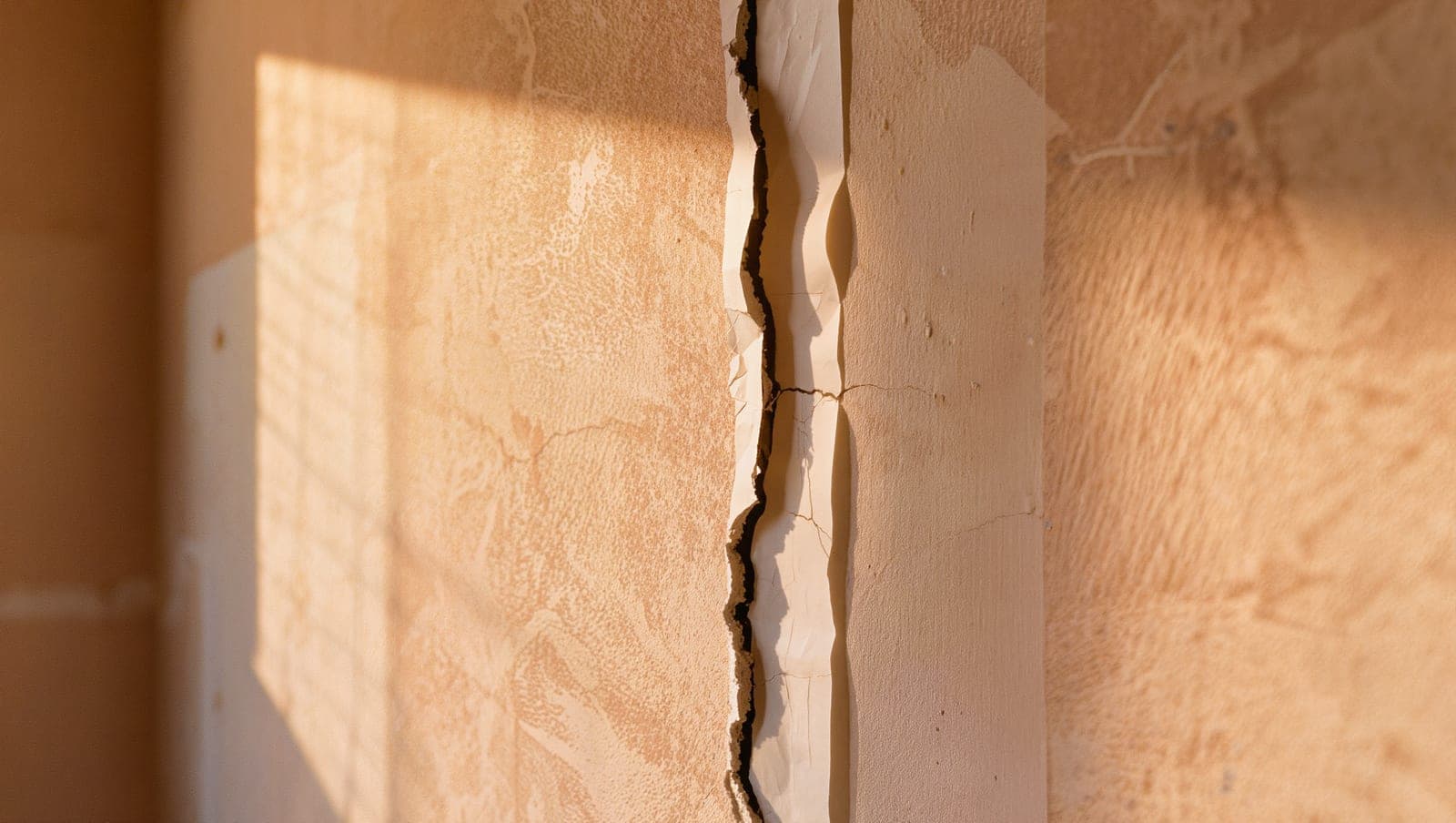
Every wall is a set of four-by-eight or four-by-twelve panels with joints between them, and the joints are the only part of the wall that is not drywall. They are tape, compound, and the skill of whoever bedded the tape. When a seam fails, it fails in one of three ways. The tape lifts and forms a bubble or a loose ribbon under the paint. The joint ridges up in a raised line you can feel with a fingertip and see in afternoon light. Or the tape holds but the joint cracks along its length, a hairline that follows the panel edge as straight as a ruler. Phoenix adds to all three. Compound dries fast in dry heat, and tape bedded in mud that skinned over before the tape was pressed in has voids behind it from day one. It sticks for a few years, and then the air handler cycles, the framing moves, a monsoon puts humidity into the house for a month, and the tape lets go.
Where the seam is tells you a good deal about why. Tapered joints, where the long factory edges of two panels meet, have a shallow trough for the tape and rarely ridge. Butt joints, where the cut ends meet with no taper, sit proud and are the seams that show in raking light and crack when trusses move. Inside corners in closets and behind doors are where tape lifts first, because they were folded, pressed, and left with the least compound. Ceiling seams every four feet across a bedroom are the ones that open in the fall as attic humidity leaves and the trusses settle back down. A seam that has bubbled directly under a window or beside a shower is a moisture story, and the moisture gets solved before the tape.
Bleuwave Handyman repairs seams by removing what failed and rebuilding the joint. A utility knife cuts the loose tape out back to where it is still bonded, and the old compound is scraped to a clean, dull surface. The joint is prefilled with setting-type compound, which cures by reaction rather than evaporation and does not starve the tape in dry air. New paper tape is bedded in a wet coat and pressed with a six-inch knife until the excess squeezes out the sides, then covered while it is still damp so the paper cannot dry and lift. Two more coats follow with ten- and twelve-inch knives, each feathered wider than the last. Ridged butt joints get the wider treatment, feathered out fourteen to sixteen inches a side so the hump disappears into the wall. We do not lay fiberglass mesh across a flat seam. Mesh stretches, and a stretched joint is a crack that has not opened yet.
In rental buildings, the same seam fails in the same place across a whole floor plan, because the crew that taped the building had the same habit in every unit. Property managers notice this at the second or third turn. We can walk one unit, identify the seams that are going to go, and fix them across a building on a schedule, with texture and paint to a corner so the repair is not itself a visible line.
A bubbled seam is a joint asking to be finished properly, twenty years late. The good news is that it only has to be done once. Get a free estimate, and we will tell you which seams have failed, which ones are about to, and what it takes to make the wall read as one surface.
Signs you need seams & tape
- A soft ridge or a loose ribbon under the paint that moves when pressed, running in a straight line along a panel edge.
- A bubble in the wall or ceiling surface with tape visible at its edge where the paint has split.
- A raised band about a foot wide, visible in raking light but not head on, especially on ceilings and at four-foot intervals.
- A perfectly straight hairline crack along a seam, often full room width on a ceiling.
- Tape peeling at an inside corner, usually in a closet, behind a door, or above a shower surround.
- A previous repair where new compound was skimmed over old lifted tape and the bubble came back through it.
Not sure this is your problem?
Start with a diagnosis. These questions end at this repair:
How the repair is done
- 1
Find the failed length and the reason
A work light held nearly flat to the wall shows every ridge and bubble, and a fingertip along the seam finds the loose tape the light misses. We note whether the joint is tapered or butt, and whether it sits under a window, beside a wet wall, or across a ceiling, because each of those changes the repair. A pin-type moisture meter reads the board around any seam near plumbing or an exterior wall before we commit to a cosmetic fix.
- 2
Cut out the loose tape and clean the joint
A utility knife scores both edges of the failed section and the tape is peeled back until it stops coming freely. Half-stuck tape is cut out too; leaving it is how the bubble returns beside the repair. The old compound is scraped back to a sound, dull surface and the dust is wiped off, since new compound will not bond to a chalky joint.
- 3
Prefill and embed new paper tape in setting compound
The joint is prefilled with 20- or 45-minute setting-type compound, which cures hard without shrinking and does not dry out under the tape in Phoenix air. Paper tape, creased down the center for inside corners, is bedded in a fresh coat and pressed with a six-inch knife until compound squeezes out along both edges. A thin skim goes over the tape while the bed coat is still wet, so the paper never has the chance to dry and lift.
- 4
Build the joint flat and feather it wide
Once the bed coat has set, a second coat of all-purpose compound goes on with a ten-inch knife, and a third coat of topping compound with a twelve-inch knife. Butt joints and ridged seams are feathered fourteen to sixteen inches to each side, checked with a straightedge, so the slope is too shallow to cast a shadow. Each coat is sanded with a fine sponge and a vacuum-attached sander before the next.
- 5
Texture, prime, and paint
Orange peel or knockdown is sprayed from a hopper gun after a test pass on cardboard, feathered past the repair so there is no border. The compound is primed with PVA so it does not flash through the paint. Then the wall or ceiling is painted to a corner or a natural break, and the room is cleaned.
What it costs in Phoenix
In the Phoenix market, one failed seam or a lifted inside corner, re-taped, textured, and painted, typically comes in at the low hundreds, with the return visits for drying making up more of that than the tape and mud. A room where several seams or every ceiling joint has gone usually runs into the mid hundreds, and a ceiling that needs a full repaint after the seams are fixed pushes higher. Seams over a live moisture problem are priced once the source is handled. Consider these ranges rather than quotes. Your free estimate will be specific to the seams in your house, the texture over them, and how far the paint has to go.
Do it yourself, or call someone?
An inside-corner peel a foot long in a closet is a reasonable homeowner project if you own a six-inch knife and are willing to use paper tape and setting compound. Where it goes wrong is speed. In a Phoenix summer, all-purpose mud on a wall begins to skin in minutes, and tape pressed into skinned mud is the exact problem you were fixing. A long butt joint that has ridged, or a ceiling seam across a bedroom, is another matter. Feathering a joint fourteen inches to a side without leaving a wave takes a wide knife and a practiced arm, and on a ceiling it takes both while standing on a ladder. Then there is texture, which announces every shortcut. Most people who take on a ceiling seam once do not volunteer for the second one.
Can a handyman repair drywall? The honest answerWhat is included
- Lifted and bubbled joint tape cut out and re-embedded
- Ridged butt joints feathered flat with wide-knife coats
- Straight-line seam cracks in walls and ceilings re-taped
- Inside corner tape repair in closets, hallways, and bathrooms
- Paper tape and setting-type compound on every bed coat
- Moisture checked at seams near windows, showers, and exterior walls
- Texture matched and feathered beyond the repair
- Prime and paint to a corner, with building-wide seam sweeps for property managers
Why Phoenix calls Bleuwave
- Failed tape is removed, never skimmed over. Compound on top of a bubble is a bubble with a delay.
- Setting compound behind every new tape, because dry desert air starves tape bedded in ordinary mud.
- Paper tape, folded and bedded, on flat joints and corners. Mesh is for small patches, not for seams that carry a wall.
- Butt joints are feathered wide enough to vanish, not just filled enough to hide.
- Same-place seams identified across floor plans, so property managers fix a building's habit rather than one unit's symptom.
- Licensed, insured, and bonded, Veteran Owned & Operated since 2022, with free estimates and same-day or next-day scheduling within 35 miles of Phoenix.
Questions Phoenix homeowners ask
Why is the drywall tape coming loose on my wall?
The tape was never fully bonded, or something got behind it. Tape bedded in compound that had already begun to dry, a common problem in Phoenix heat, has voids under it that let go over time. Humidity from a monsoon month, a leak, or a shower with a weak fan can do the rest. Framing movement pulls at seams too, but tape that is lifting rather than cracking is almost always a bonding failure.
Can you fix lifted tape without removing it?
Not reliably. A bubble can be sliced, glued, and pressed flat, and that holds sometimes, but the rest of the poorly bonded length is still there waiting. Cutting the loose section out and re-taping takes only slightly longer and does not come back.
What is the difference between paper tape and mesh tape?
Paper tape is not elastic. Bedded in compound, it makes a joint that resists cracking the way the original tape does, and it folds cleanly for inside corners. Fiberglass mesh is self-adhesive and fast, but it stretches, so it needs setting-type compound to gain any strength and still does not belong on long flat seams or corners. We use paper for seams and mesh only for small, stable patches.
Why can I see the seams in my ceiling when the light comes in?
Raking light. Sun coming across a ceiling from a window casts a shadow behind every ridge, and butt joints that were not feathered wide enough become visible stripes. Sometimes the joint has ridged because the panels moved. The fix is the same: cut back if needed, then feather the joint wide, sixteen inches or more per side, so the slope is too shallow to cast a shadow.
Does a cracked seam mean my house is settling?
Sometimes. A straight crack along a seam is mostly tape and compound giving way at the weakest line, often after years of small movement. A hairline across a ceiling that opens and closes with the seasons is truss movement, which is common in Phoenix and not structural. Diagonal cracks that start at door and window corners are settling and are read differently. We look at all of them before quoting.
How long does a seam repair take?
Usually two short visits. The first cuts out the tape and beds new tape in setting compound, and a second coat can often go on the same day. The finish coat, texture, primer, and paint follow once everything has dried, which in Phoenix is typically the next day.
Related repairs
Guides worth ten minutes
Guide · 8 min read
Repair vs. Replace Damaged Drywall
Most drywall damage can be patched. Some of it should not be. Here is a framework, a decision table, and the water-damage rule of thumb that settles most arguments.
Guide · 8 min read
How Much Does Drywall Repair Cost in Phoenix?
The same doorknob hole can draw three different prices from three honest people. Here is what each of them counted, what the Phoenix ballparks look like, and how to get a number you can hold someone to.
Elsewhere on the site
Related services, nearby city pages, and reading that pairs with this repair.
Looking for the service page? See how we handle this as a scheduled service, or browse all services.
Make the wall read as one piece. Get a free estimate.
Licensed, insured & bonded · Veteran Owned & Operated since 2022 · Serving 35 miles around Phoenix.