
Repair Hub · Phoenix Metro
Ceiling Water Stains Sealed So They Stay Gone, After the Leak Is Found
The ring on the ceiling is a message. We read it, stop what wrote it, and seal and repaint so it never bleeds back through.
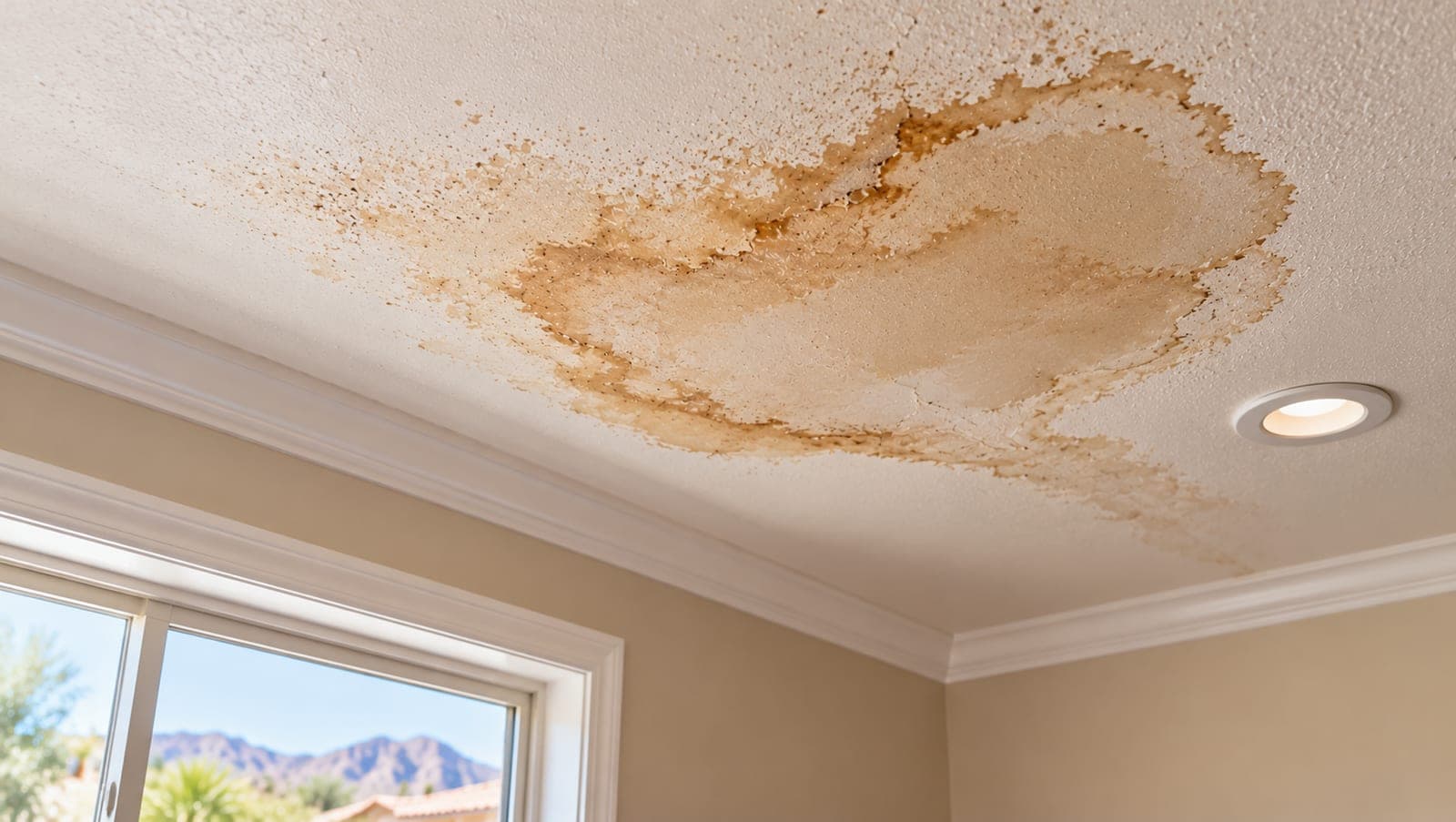
A water stain is not paint damage. It is a deposit. When water moves through drywall it dissolves what it passes: the glue and tannins in the paper facing, minerals in the gypsum, dust and rust from the attic, and whatever the water carried in with it. As the wet spot dries from the outside in, that dissolved material migrates to the surface and is left behind at the edge, which is why a stain is a ring with a dark rim and a paler center, and why a spot that has been wet twice has two rings. In Phoenix the water usually comes from above. A clogged air conditioner condensate line overflows the secondary pan in the attic. A cracked roof tile or a lifted strip of underlayment lets a monsoon downpour in. A scupper on a flat roof stops draining. An upstairs supply line or shower pan gives up. The stain shows days after the event, sometimes weeks, and it is often the first anyone knows about the leak.
The instinct is to cover it. Ordinary latex paint cannot. The compounds in a water stain are water-soluble and latex paint is water-based, so the stain dissolves into the fresh coat and rises through it as it dries. It can take a week or a season. A stain covered with latex is a stain on a short vacation. Sealing one requires a primer the stain cannot travel through, which means a shellac-based or oil-based stain-blocking primer applied to dry drywall, followed by ceiling paint over the whole surface so the sealed area does not read as a different sheen from the rest.
The word that matters in that sentence is dry. Bleuwave Handyman treats every stain as evidence until a moisture meter says otherwise. We read the ceiling and the attic above it, trace the stain to a likely source, and confirm the source is fixed before anything is sealed. When the culprit is the condensate drain, a supply line, or a water heater, the licensed plumbing and HVAC companies in the Bleuwave family repair it, and the handyman crew handles the ceiling. If the drywall under the stain is still sound, the repair is a seal and a repaint. If it is soft, sagging, or crumbling, the stained section is cut out and replaced, and we tell you which case yours is before the work starts.
Property managers meet water stains at the worst moment, usually on a walkthrough with a prospective tenant. A stained ceiling reads as an unresolved leak even when the leak was fixed last year, and it is one of the first things a renter photographs at move-in. We seal and repaint stains as part of unit turns and work orders, note the source and the moisture reading for the file, and can schedule the visit after hours when the unit is occupied.
The stain itself is inexpensive to fix. What it points at may not be, and it does not get cheaper by waiting. Monsoon season and the summer air-conditioning load both come back every year. Estimates are free.
Signs you need water stains
- A tan or brown ring on the ceiling with a darker outer edge, often directly below the air handler closet, a bathroom, or a roof valley.
- Concentric rings, or a stain with more than one edge, which means the spot has been wet more than once.
- A stain that has reappeared through a previous coat of paint, sometimes as a faint yellow shadow at first.
- A stain that grows or darkens during a monsoon storm or in the hottest weeks of summer, when the AC runs hardest.
- Ceiling paint that has bubbled, cracked, or flaked inside the ring, or texture that has gone soft or dropped.
- A faint musty smell in the room, or a damp reading on the drywall days after the last rain.
Not sure this is your problem?
Start with a diagnosis. These questions end at this repair:
How the repair is done
- 1
Meter the ceiling and find the source
We take pin-meter readings across the stain and a foot beyond it in every direction, then look above: the condensate pan and drain line, the roof deck around vents and valleys, the flashing at any parapet, and the plumbing in an upstairs bath. If the drywall reads wet, the ceiling waits. If the source calls for a licensed trade, the plumbing or HVAC company in the Bleuwave family takes it. Nothing gets sealed over damp drywall, because primer over moisture peels, and it hides a problem that is still running.
- 2
Prepare the surface
Flaking paint and loose texture come off with a scraper. The edge of the stain is lightly sanded with a fine sanding sponge so the ridge of deposited material does not telegraph through the primer, and the dust is wiped away. Where the paper facing has torn or the texture has washed out, the spot is feathered with setting-type compound and re-textured to match the ceiling before any sealing begins.
- 3
Seal with a stain-blocking primer
A shellac-based primer goes on heavy or old stains, brushed and rolled in two coats and feathered several inches past the rim. In an occupied unit where shellac odor is a concern, an oil-based stain-blocking primer does the same job with more ventilation time. Water-based stain blockers exist, and they are fine on a light shadow. We do not trust one on a dark ring, and neither should you.
- 4
Repaint the ceiling corner to corner
Flat ceiling paint is rolled from wall to wall, not spotted over the sealed area, because even flat paint shows a halo where new meets old when light comes across the ceiling at a low angle. Furniture is covered, floors are protected, and light fixtures and fan blades are masked. Most bedroom and bath ceilings take one visit.
- 5
Replace board where the stain hides damage
When the meter or a thumb says the gypsum under the stain has gone soft, sealing it would be painting a bruise. The section is cut back to the joists, new board in the original thickness is hung, and the seams are taped and set in setting-type compound before texture, primer, and paint. That is a ceiling drywall repair rather than a stain repair, and the estimate will say so plainly.
What it costs in Phoenix
Sealing and repainting a dry stain on sound drywall is among the less expensive ceiling repairs in the Phoenix market, usually landing in the low hundreds for a bedroom or bath ceiling once the whole ceiling is painted. Cutting out and replacing softened board underneath adds materially to that, and the leak repair itself is a separate line handled by whichever licensed trade the source calls for. Access matters as well; a vaulted great-room ceiling costs more to paint than a hallway. Those are ballparks, not quotes. A free estimate on your ceiling, after someone has looked above it, is the only number to plan around.
Do it yourself, or call someone?
If the stain is small, the drywall reads dry, and you know for certain what caused it and that it has been fixed, this is a fair weekend job: a can of shellac-based primer, a small brush, ceiling paint, a roller on an extension pole, and the patience to paint the whole ceiling instead of the spot. Two things go wrong for homeowners. The first is skipping the source, which turns a Saturday of painting into a repeat performance after the next storm. The second is spot-painting over the sealed area and discovering that even flat paint shows a halo when the light comes in low. If the stain is large, the ceiling is textured, the board feels soft, or you do not know where the water came from, that is the point to have someone look at the attic before the ceiling.
Can a handyman repair drywall? The honest answerWhat is included
- Moisture-meter readings across and beyond the stain before any sealing
- Attic and source inspection for condensate, roof, and plumbing leaks
- Leak repair by the licensed plumbing and HVAC companies in the Bleuwave family
- Shellac- or oil-based stain-blocking primer, two coats, feathered past the rim
- Flaking paint and damaged texture repaired and re-textured before sealing
- Full-ceiling flat paint, corner to corner, so no halo shows
- Cutout and replacement of softened board under the stain when needed
- Furniture covered, floors protected, and dust controlled in occupied homes and units
Why Phoenix calls Bleuwave
- We look above the ceiling before we touch it. A stain sealed over a live leak is a stain we would be back to seal again, on your dime.
- Shellac or oil, never latex, over a water stain. The chemistry is not negotiable and we do not economize on it.
- One family of companies for the leak and the ceiling. The condensate line, the supply fitting, and the drywall get fixed in the right order without three separate appointments.
- Whole-ceiling paint is standard, not an upsell. A sealed spot with a halo around it is a repair that still shows.
- Same-day, next-day, and after-hours visits across a 35-mile radius of Phoenix, including turns and work orders where the unit shows tomorrow.
- Licensed, insured, and bonded, Veteran Owned & Operated since 2022, with free estimates on every ceiling.
Questions Phoenix homeowners ask
Why does the water stain bleed through new paint?
Because the stain is made of water-soluble material sitting in the paper and gypsum, and latex paint is water-based. The fresh paint rewets the stain, the stain dissolves into it, and it rises to the surface as the coat dries. Only a primer the stain cannot pass through, shellac-based or oil-based, stops that migration. Paint over that primer stays clean.
Is a dry water stain on the ceiling still a problem?
The stain itself is not, if the drywall under it reads dry and firm. The question is whether the leak that made it is truly finished or simply between storms. A roof leak in Phoenix can be dry for nine months and active for the other three. We meter the ceiling and look at the source before sealing, so the answer is based on evidence rather than the calendar.
How can I tell if the leak that caused the stain is still active?
Press the center of the stain; soft or spongy means wet. Watch the edge during the next storm or the next stretch of triple-digit days, since a growing or darkening ring is an active leak. A moisture meter gives a definite reading and is the tool we use. If you cannot tell, treat it as active until proven otherwise.
Is a brown ceiling stain a sign of mold?
Not by itself. A tan or brown ring is mineral and tannin deposit left by drying water. Mold shows as black, green, or gray spotting, often fuzzy, and usually comes with a musty smell. A stain that has stayed wet for days can grow mold behind the paint, which is one more reason we meter before sealing. Heavy or widespread mold is referred to a specialist rather than covered.
What primer covers water stains on a ceiling?
A shellac-based stain-blocking primer is the most reliable choice and the one we reach for on dark or repeated stains. An oil-based stain-blocking primer works well and has less odor. Water-based stain blockers are acceptable on faint stains but are the reason many homeowners are painting the same ring for the second time. Whichever primer is used, it has to go on dry drywall.
Do you repaint the whole ceiling or just the spot?
The whole ceiling, in almost every case. Spot-painting leaves a halo where new paint meets old that shows whenever light rakes across the ceiling, which in a Phoenix house is most of the afternoon. A bedroom or bathroom ceiling is a modest amount of paint, and rolling it end to end is the difference between a repair and a reminder.
Related repairs
Guides worth ten minutes
Guide · 8 min read
Repair vs. Replace Damaged Drywall
Most drywall damage can be patched. Some of it should not be. Here is a framework, a decision table, and the water-damage rule of thumb that settles most arguments.
Guide · 8 min read
How Much Does Drywall Repair Cost in Phoenix?
The same doorknob hole can draw three different prices from three honest people. Here is what each of them counted, what the Phoenix ballparks look like, and how to get a number you can hold someone to.
Elsewhere on the site
Related services, nearby city pages, and reading that pairs with this repair.
Looking for the service page? See how we handle this as a scheduled service, or browse all services.
Find the leak, seal the stain, paint it once. Get a free estimate on your ceiling.
Licensed, insured & bonded · Veteran Owned & Operated since 2022 · Serving 35 miles around Phoenix.