
Repair Hub · Phoenix Metro
Drywall Replacement for Walls a Patch Can No Longer Save
Full-section and whole-wall replacement, cut out, hung, taped, textured, and painted by one crew across the Phoenix metro.
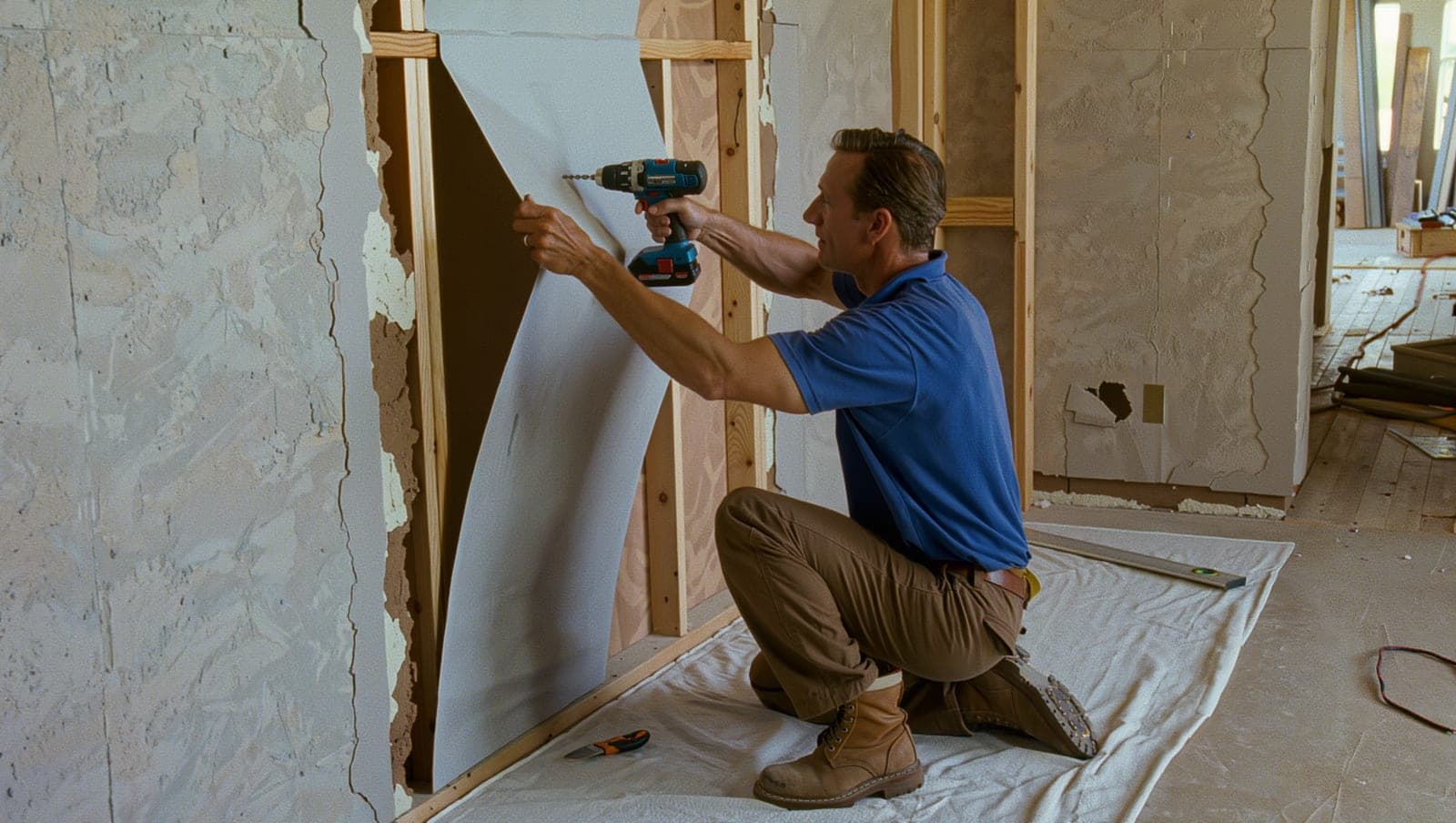
A patch fixes a spot. Replacement fixes a wall. The line between them is drawn by how much of the board has failed and why. When a ceiling has sagged between joists because it was hung with 1/2-inch board on 24-inch centers and forty summers of attic heat have loosened the gypsum from its paper, a patch is a bandage on a broken bone. When water has run down inside a wall from a roof leak or a failed shower pan, the damage is a tall stripe, not a spot. When a rental unit has a dozen holes in one hallway, or termites have eaten the paper off the back of a board, or the wall between the garage and the kitchen has been opened so many times it no longer holds a fire rating, it is time to stop patching.
Phoenix houses reach this point in local ways. Slab-on-grade stucco homes settle in desert soil and open the same cracks year after year. Attics run well past 130 degrees in summer, and old adhesives and fasteners let go. Monsoon leaks soak the same ceiling for three seasons before anyone opens it. A swamp cooler left on the roof after a house was converted to refrigerated air keeps leaking into the hall ceiling long after it stopped being used. And the texture on most Valley walls, orange peel and knockdown, is forgiving of one patch and merciless toward five patches in a row.
Bleuwave Handyman replaces drywall from a single sheet to a full room. We assess with a moisture meter and a straightedge, check the framing when the board comes off, and hang new board in the same thickness as the original, 1/2-inch on most walls and 5/8-inch on ceilings and fire-rated garage walls where that is what belongs. Seams are paper-taped and set in setting-type compound, finished in three coats, textured to match the adjoining walls, primed, and painted. One crew does all of it, so the person who hung the board is the person who decides when the texture is right.
For property managers, replacement is often the sensible call on a turn. A hallway with many holes, a bedroom wall a tenant abused, or a laundry closet with years of moisture damage is faster and cleaner to replace than to patch piecemeal, and the result reads as new at the walkthrough instead of as heavily repaired. We scope full walls and full rooms on work-order timelines, remove and haul the debris, and can schedule after hours or between occupancies.
Deciding between repair and replacement is exactly what a free estimate is for. We will tell you which one your wall needs, and if a patch will honestly do the job, we will say so.
Signs you need replacement
- A ceiling that sags in visible waves between joists, or a wall that bows when you press it.
- Water damage that runs in a vertical or horizontal stripe rather than a single ring, or that has been through more than one leak.
- Multiple holes, dents, or previous patches concentrated on one wall, so that patching would leave a quilt.
- Drywall paper that flakes, peels, or has been hollowed from behind, a common sign of termite activity.
- Crumbling board around windows, doors, or bathtubs where repeated moisture has turned the gypsum to chalk.
- A garage-to-house wall that has been cut open for wiring or plumbing and never closed with the right fire-rated board.
How the repair is done
- 1
Assess the board, the framing, and the cause
We read the wall with a moisture meter, lay a straightedge across it to map sag and bow, and tap for hollow spots. We note the board thickness and type so the replacement matches, including 5/8-inch Type X where a garage wall or ceiling calls for it. If the damage has a cause that will recur, such as a leak or a moving foundation crack, we address it or point you to the licensed trade in the Bleuwave family who does.
- 2
Remove the old board without wrecking the room
The area is sealed with plastic and the floor covered. Old drywall is cut in manageable sections with an oscillating tool and a utility knife, not pried off in a cloud of dust. Old screws and nails come out of the framing. We inspect the studs or joists, replace damaged insulation, and add blocking or nailers where seams will land so the new board has solid backing on every edge.
- 3
Hang the new sheets
New board goes up in the largest pieces the space allows, factory edges together, seams staggered so no four corners meet. Ceilings are hung first when both are being done. Screws are set just below the paper without breaking it, on the spacing the board and framing call for. Corner bead is installed on outside corners and set true so it does not telegraph under paint.
- 4
Tape and finish in three coats
Seams and inside corners are paper-taped in setting-type compound, which cures by chemical reaction rather than evaporation and resists cracking. Two coats of topping compound follow, each wider than the last and sanded between. On walls that meet existing textured walls, the finish is feathered so the new surface meets the old at the same plane.
- 5
Texture, prime, and paint
Texture is matched from a test board, sprayed with a hopper and, for knockdown, flattened with a knockdown knife at the right minute. New drywall and new compound absorb paint differently, so the whole surface gets a drywall primer before finish paint. Where a replaced section meets an existing wall, we usually paint corner to corner so there is no line to find.
What it costs in Phoenix
In the Phoenix market, replacing a section of wall a few feet on a side, with texture and paint, typically runs from the mid hundreds into the low thousands. Whole walls and full rooms are usually priced by the square foot of new board installed and finished, and the price climbs with ceiling height, texture complexity, fire-rated board, insulation, and how much of the room has to be painted to blend. Debris hauling and framing repairs are extra when needed. These are ballparks for planning, not a price list. Your wall gets a written, itemized estimate after we have seen it, and that estimate is free.
Do it yourself, or call someone?
Hanging a sheet of drywall is not mysterious, and a homeowner with a helper, a drywall lift, and a free weekend can do it. What separates a wall that looks new from a wall that looks replaced is everything after the board is up: the taping, the three coats, the sanding, the texture, and knowing that the ceiling goes up before the walls and that seams should never land on a door corner. A half-inch sheet weighs enough to hurt, and a five-eighths ceiling sheet more so. If you are replacing one small section on a flat, smooth wall, try it. For a ceiling, a fire-rated garage wall, or anything that has to meet knockdown texture without a seam, most people are happier writing the check.
Can a handyman repair drywall? The honest answerWhat is included
- Single-sheet, full-section, and whole-wall drywall replacement
- Sagging and water-damaged ceiling replacement
- 5/8-inch Type X board for garage walls and ceilings that need it
- Framing inspection, blocking, and insulation replacement behind the wall
- Paper tape and setting-type compound, finished in three coats
- Corner bead replacement on damaged outside corners
- Texture matching to orange peel, knockdown, or smooth
- Debris removal, dust control, and prime and paint to a finished wall
Why Phoenix calls Bleuwave
- We tell you when a patch will do. Replacement is recommended when the board has failed, not when the estimate could be larger.
- Board thickness and type match the original, including fire-rated 5/8-inch where a garage wall or ceiling calls for it.
- Paper tape set in setting-type compound on every seam, because a replaced wall that cracks at the joints has not been replaced.
- One crew from demo through paint. The texture is judged by the people who hung the board.
- Dust contained, floors covered, debris hauled. You should not have to clean up after a repair.
- Licensed, insured, and bonded, Veteran Owned & Operated since 2022, with same-day, next-day, and after-hours scheduling within 35 miles of Phoenix.
Questions Phoenix homeowners ask
How do I know if drywall should be repaired or replaced?
Replace when the board itself has failed: it is soft, sagging, crumbling, delaminated, or damaged over a large or repeated area. Repair when the board is sound and the damage is local, even if the hole is big. A fist-sized hole in good board is a patch. A ceiling that sags between every joist is a replacement, even if it has no holes at all. We will tell you which one you have.
How long does drywall replacement take?
A single wall section is usually two or three short visits over several days, because compound needs to cure between coats and texture needs to dry before primer. A full room, including ceiling, is typically a week or so of visits from demo through paint. Summer air here shortens drying. A humid monsoon week lengthens it.
Will the new drywall match the rest of the room?
Yes, if the finish work is done right. The board itself is the easy part. The match comes from feathering the new surface to the old plane, texturing from a test board until the pattern is the same, and painting corner to corner so there is no sheen line. On smooth walls we will tell you honestly that a smooth match is the hardest kind.
Do you need a permit to replace drywall?
Like-for-like cosmetic drywall replacement is generally not the kind of work that triggers a permit. If the project involves moving walls, changing electrical or plumbing inside them, or altering a fire-rated assembly, that is a different conversation, and we will tell you before work starts. The licensed trades in the Bleuwave family handle the electrical and plumbing side when it comes up.
What thickness of drywall should be used?
Match the original. Most Phoenix walls are 1/2-inch. Many ceilings are 5/8-inch, which resists sagging over joists at 24 inches on center, and the wall between an attached garage and the house is typically 5/8-inch Type X for fire resistance. Putting 1/2-inch where 5/8 belongs is a common shortcut and a visible one within a few years.
Do you haul away the old drywall?
Yes. Old board, wet insulation, and debris are bagged, removed, and disposed of as part of the job. The room is left swept and the plastic is gone when we are.
Related repairs
Guides worth ten minutes
Guide · 8 min read
Repair vs. Replace Damaged Drywall
Most drywall damage can be patched. Some of it should not be. Here is a framework, a decision table, and the water-damage rule of thumb that settles most arguments.
Guide · 8 min read
How Much Does Drywall Repair Cost in Phoenix?
The same doorknob hole can draw three different prices from three honest people. Here is what each of them counted, what the Phoenix ballparks look like, and how to get a number you can hold someone to.
Elsewhere on the site
Related services, nearby city pages, and reading that pairs with this repair.
Looking for the service page? See how we handle this as a scheduled service, or browse all services.
If the wall is past patching, let us say so and price it. Get a free estimate.
Licensed, insured & bonded · Veteran Owned & Operated since 2022 · Serving 35 miles around Phoenix.