
Repair Hub · Phoenix Metro
Drywall Crack Repair That Holds, Not Spackle That Reopens
Settling cracks, corner cracks, and ceiling seams across the Phoenix metro, taped and finished so they stay closed through the next monsoon.
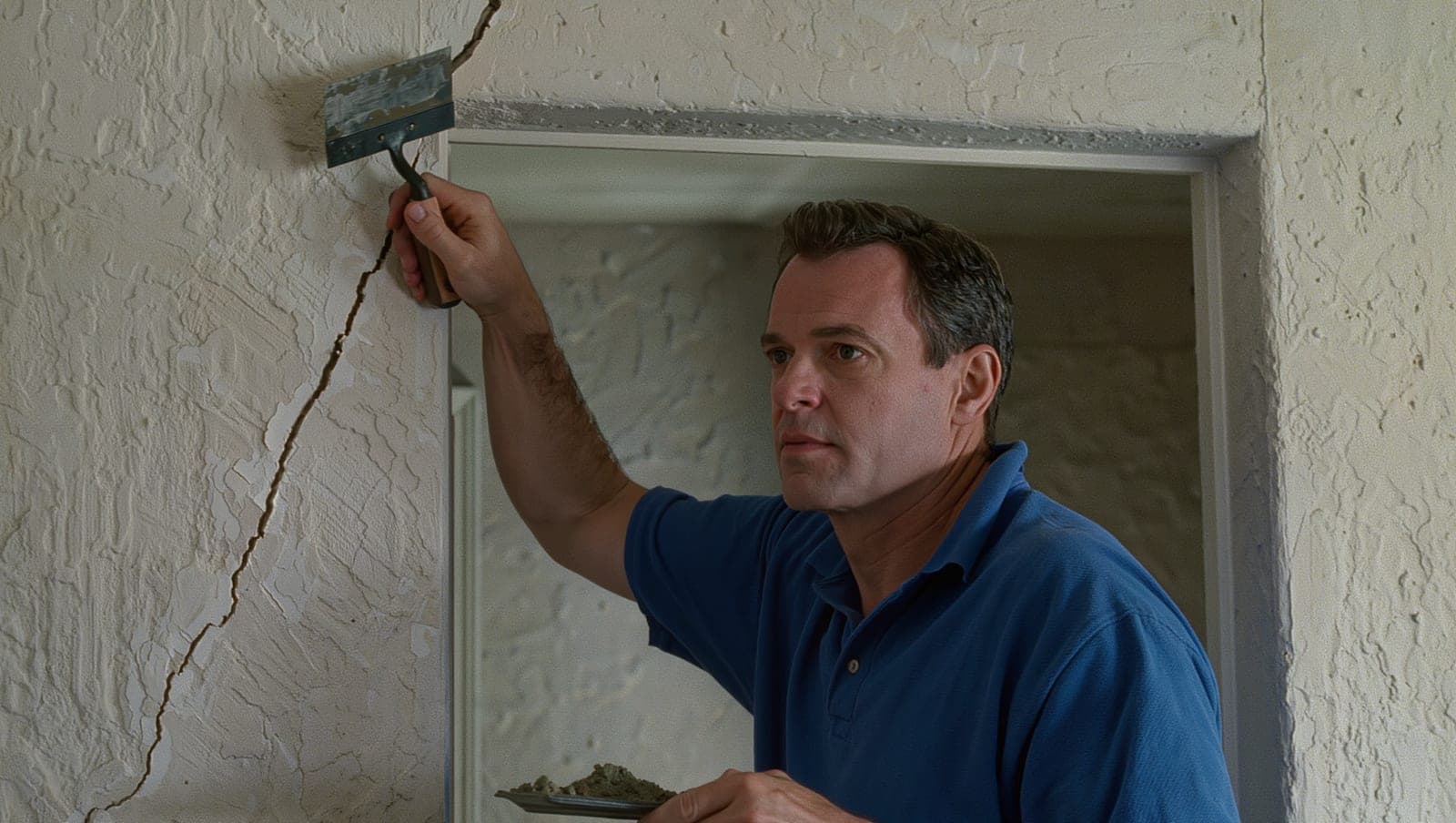
A drywall crack is the wall reporting movement it could not absorb. Gypsum board is rigid and its paper face is not elastic, so when the framing behind it shifts even a fraction of an inch, the board breaks along its weakest line, usually a taped joint or the corner of an opening. Phoenix houses supply plenty of movement. Most are slab-on-grade with wood framing under stucco, and the soils beneath them, from the clay pockets of the East Valley to the caliche and sand elsewhere, swell with monsoon moisture and shrink through the dry months. Framing lumber loses water through a summer of 110-degree days and takes some back in August. Roof trusses arch upward in hot, dry attics and settle in humid ones, which opens seams where ceiling meets wall. None of this is unusual or, in most cases, alarming. It is simply why the same crack above the same bedroom door keeps returning after every coat of paint.
Cracks fall into a few families, and reading them correctly is most of the repair. Diagonal cracks running from the corners of doors and windows are stress cracks; the opening is the weak point and the board breaks there first. Straight cracks along a seam mean the original tape has let go, often because it was bedded thin. Cracks at the top corners of a room that open in summer and close in winter are truss uplift, and they need a repair that floats rather than one that fights. Cracks along an outside corner mean the metal bead has separated. Then there are the cracks that are not drywall problems: wide, growing, or offset cracks, especially paired with doors that suddenly stick, sloping floors, or stair-step cracks in the exterior stucco. Those get a candid conversation about a structural assessment before anyone reaches for a knife.
Bleuwave Handyman repairs drywall cracks the way that keeps them closed. The crack is cut open into a shallow V so the compound has something to bond to, and the loose paper is removed. It is taped, not just filled, because compound across a crack without tape is a crack with a delay. The tape is bedded in setting-type compound, which cures hard and does not shrink, then built out in thin feathered coats, sanded, textured to match the wall, primed, and painted. Truss uplift cracks at the ceiling line get a floating detail or a crown molding solution rather than a rigid bond that will fail again next June. Corner bead cracks get the bead reset or replaced. The goal is a repair that outlasts the next round of seasons, which spackle across the surface never does.
Cracks are also the most common cosmetic item on inspection reports and tenant move-in checklists, and in multifamily buildings the same crack appears in the same place in every unit of a floor plan. We handle those as a batch, and we can prime and paint to a natural break so the repair is not a bright stripe on a faded wall. We are licensed, insured, and bonded, Veteran Owned & Operated since 2022, working within 35 miles of Phoenix, with same-day and next-day availability most weeks and free estimates on every job.
If a crack in your house has been repainted more than once, the paint was never the problem. Get a free estimate and we will tell you what the crack is, whether it needs anything more than a proper drywall repair, and what it costs to close it and keep it closed.
Signs you need crack repair
- A diagonal crack running from the upper corner of a door or window frame toward the ceiling.
- A straight, hairline crack along a seam that reopens every year in the same place despite paint.
- A gap or crack where the wall meets the ceiling that is wider in summer than in winter.
- A crack running down an outside corner, sometimes with the metal corner bead visible or bulging.
- Paint that has cracked and lifted along a line rather than flaking in a patch, showing the joint beneath.
- A crack wider than the edge of a credit card, one side raised above the other, or one that is visibly longer than it was last season; these need a closer look before repair.
How the repair is done
- 1
Read the crack and rule out the serious kind
We check width, direction, and displacement with a straightedge, look for matching cracks on the exterior stucco and the slab, and ask how doors and windows in the room have been behaving. Hairline, stable, cosmetic cracks are repaired on the spot. Anything with offset, active growth, or company outside the wall gets a recommendation for a structural engineer or foundation specialist first.
- 2
Open the crack and remove failed tape
A utility knife cuts the crack into a shallow V about a quarter inch wide, removing loose paper and any old spackle or paint that would sit between the compound and sound board. Where the original tape has bubbled or split, it is cut out for the full length of the failure. At outside corners, loose bead is refastened with screws or replaced with new metal or vinyl bead.
- 3
Tape and bed in setting compound
Paper tape is bedded over the crack in 20- or 45-minute setting-type compound, which cures chemically, does not shrink, and gives the joint real tensile strength. Fiberglass mesh is used only under setting compound on flat, stable seams. At truss uplift cracks, the tape is fastened to the ceiling and floats over the wall, or crown molding is installed fixed to the wall only, so the seasonal movement has somewhere to go.
- 4
Build out, feather, and sand
Two or three thin coats of all-purpose or topping compound follow, each with a wider knife, feathered eight to twelve inches out so the repair has no edge. Coats dry fully between. Sanding is done with a fine sponge and vacuum-attached sander under a work light held at a low angle, because a low angle is how the afternoon sun will inspect it.
- 5
Texture, prime, and paint
Texture is matched by test pass to the wall's orange peel, knockdown, or hand finish and feathered past the repair. Raw compound is primed with PVA so the paint does not flash, and the wall is painted to a blend or a corner. Where several cracks run through one room, painting wall to wall is usually the honest choice.
What it costs in Phoenix
In the Phoenix market, a single hairline crack repaired properly, with tape, setting compound, texture, and paint, typically lands in the low hundreds, and most of that is the two visits the drying time demands. Several cracks in one room, or one long crack at the ceiling line, run higher, and a truss uplift detail or replaced corner bead adds labor. Repainting a whole wall or room to avoid a visible stripe is the usual swing factor. A crack that turns out to be structural is a different project with a different professional, and we will say so rather than charging you to paint over a symptom. These are ballparks rather than quotes. The free estimate is specific to your walls and to what the cracks turn out to be.
Do it yourself, or call someone?
A hairline crack in a seam is within reach of a patient homeowner, if it is done as a taping job and not a filling job: open it, tape it, bed it, feather it. The error nearly everyone makes is the tube of paintable caulk or the tub of spackle dragged across the surface, which looks perfect for one season and then reopens along the same line, now with a ridge. Setting compound, sold as a powder and mixed on site, is unfamiliar and unforgiving of slow work, and feathering the repair wide enough to hide a taped crack takes a twelve-inch knife and practice. Ceiling-line cracks add a ladder and a stiff neck, and a long crack means a long stripe of texture and paint to match. If a crack has come back twice on your watch, it is not a paint problem anymore, and the free estimate is the cheaper experiment.
Can a handyman repair drywall? The honest answerWhat is included
- Settling and stress cracks over doors and windows, taped and finished
- Failed seam tape cut out and replaced
- Truss uplift cracks at the ceiling line handled with a floating detail or crown
- Outside corner bead reset or replaced
- Ceiling cracks and seams, including popcorn and knockdown ceilings
- Texture matched and feathered past the repair
- Primed and painted to a blend or a natural break
- Honest referral when a crack points to foundation movement
Why Phoenix calls Bleuwave
- We tape every crack. Filling without tape is why the last repair came back, and we do not sell that twice.
- Setting compound on the bed coat, so the repair cures hard instead of shrinking into a fresh hairline.
- We read the crack before we fix it, and we will tell you plainly if it needs an engineer instead of a knife.
- Truss uplift handled as movement, not as a defect to be glued shut every June.
- Batch repairs across units and floor plans for property managers, with paint to a break so the repair does not announce itself.
- Licensed, insured, and bonded, Veteran Owned & Operated since 2022, with free estimates across a 35-mile radius of Phoenix.
Questions Phoenix homeowners ask
Are drywall cracks a sign of foundation problems?
Usually not. Hairline cracks at door and window corners and along seams are the ordinary settling and seasonal movement of a Phoenix house. Cracks that are wide, growing, offset so one side sits proud of the other, or accompanied by sticking doors, sloping floors, or stair-step cracks in the stucco deserve a structural look before cosmetic repair. We will tell you which kind you have.
Why does the crack keep coming back after I paint it?
Because paint and spackle have no strength across a joint that moves. A durable repair opens the crack, embeds tape in setting compound, and feathers over it, so the joint is reinforced rather than concealed. Done that way, most settling cracks stay closed for years.
Should I worry about a crack where the wall meets the ceiling?
If it opens in the hot, dry months and closes in winter, it is truss uplift, a well-known behavior of roof trusses in Phoenix attics and not a structural concern. Rigid repairs fail. The fix is a floating tape detail or crown molding fastened to the wall only, so the movement is hidden.
Does homeowners insurance cover settling cracks?
Almost never. Settling, earth movement, and wear are standard exclusions in most policies. Cracks caused by a covered event, such as a plumbing leak that softened the wall, may be part of that claim. Keep photos and the estimate either way.
Can you fix cracks in a corner without redoing the whole corner?
Yes, in most cases. Inside corners are retaped with paper tape and finished; outside corners with loose bead are refastened or have a section of bead replaced. When the bead has separated along its full height, replacing it is the cleaner repair, and it is still a modest job.
What is the best time of year to repair cracks in Phoenix?
Any time, with one note. Seasonal cracks are widest in late spring and early summer and narrowest after the monsoon. Repairing a settling crack at its widest point is fine because the tape carries the movement. Truss uplift is best addressed with a floating detail whenever it is convenient, since no season removes the movement.
Related repairs
Guides worth ten minutes
Guide · 8 min read
Repair vs. Replace Damaged Drywall
Most drywall damage can be patched. Some of it should not be. Here is a framework, a decision table, and the water-damage rule of thumb that settles most arguments.
Guide · 8 min read
How Much Does Drywall Repair Cost in Phoenix?
The same doorknob hole can draw three different prices from three honest people. Here is what each of them counted, what the Phoenix ballparks look like, and how to get a number you can hold someone to.
Elsewhere on the site
Related services, nearby city pages, and reading that pairs with this repair.
Looking for the service page? See how we handle this as a scheduled service, or browse all services.
Close it once. Get a free estimate.
Licensed, insured & bonded · Veteran Owned & Operated since 2022 · Serving 35 miles around Phoenix.