
Repair Hub · Phoenix Metro
Water-Damaged Drywall Cut Out, Dried, and Rebuilt to Stay Fixed
The leak stopped by licensed plumbing or HVAC, the wall rebuilt by the handyman crew, the stain sealed so it never comes back.
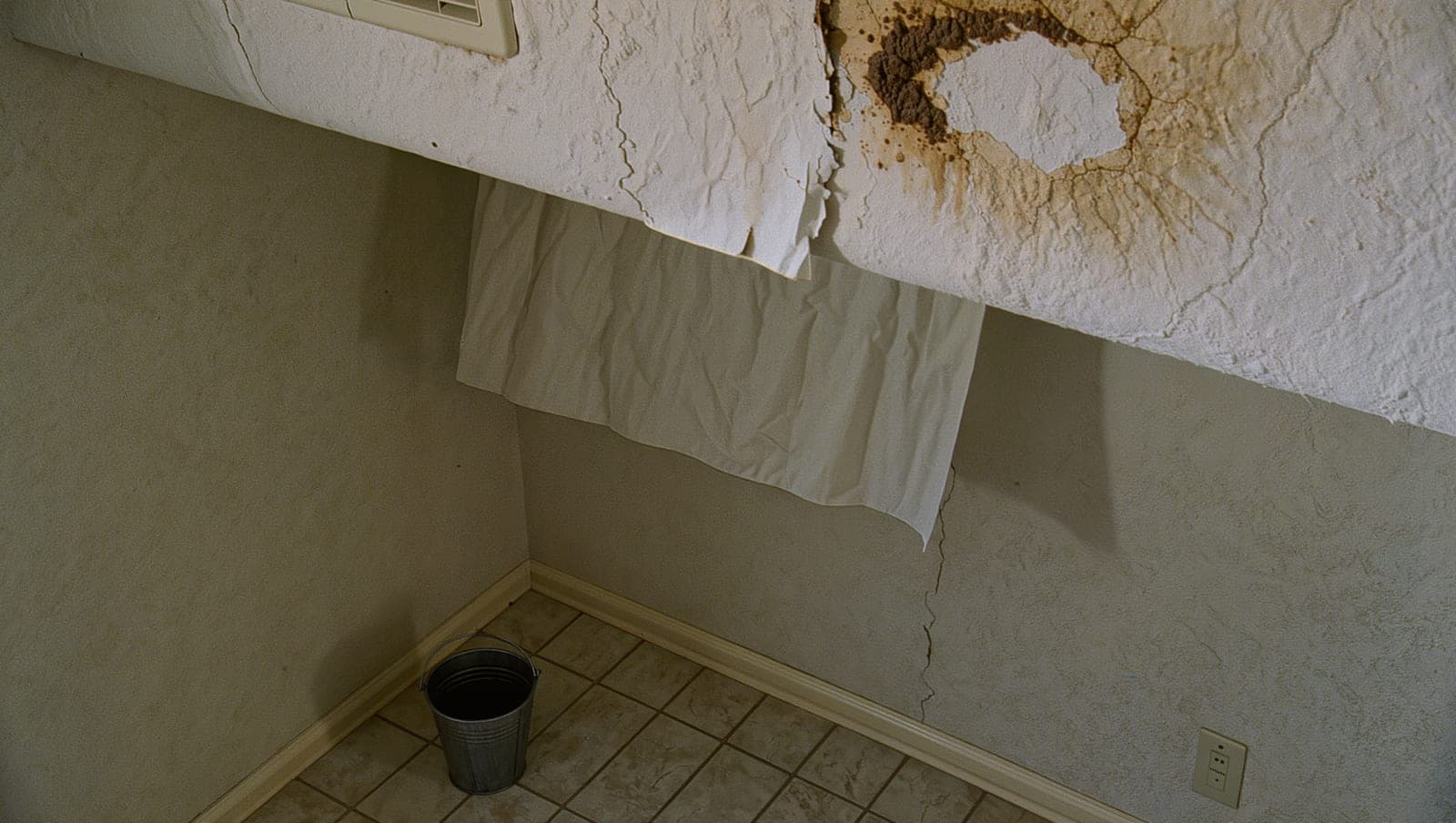
Drywall is a slab of gypsum pressed between two sheets of paper. It is strong in compression, cheap, and fire resistant, and it has no defense against water. Wet paper delaminates. Wet gypsum turns to chalk. In Phoenix the water arrives from predictable places. Monsoon storms from mid-June through September drive rain under roof tiles and through parapet cracks. The air conditioner runs most of the day in July, and when its condensate drain clogs, the overflow pan in the attic spills onto the ceiling below. Water heaters let go in garages and hall closets. Supply lines fail under sinks. Swamp coolers drip. Slab leaks wick up into the bottom of a wall and rot the board from the baseboard up, quietly, behind the paint.
The instinct is to wait for the stain to dry and paint over it. That is the most expensive thing you can do. Gypsum that has been soaked loses its structure even after it dries, and paper that has been wet is now food for mold, which in a warm attic or a closed wall cavity needs only a day or two to start. The stain will bleed back through ordinary paint within a season. And if the leak was never truly fixed, the next storm or the next hot week puts the water right back where it was.
The order of operations matters more than the tools. First the water has to stop. Bleuwave is a family of companies that includes licensed plumbing, HVAC, and electrical contractors, so when the source is a condensate line, a supply fitting, or a water heater, the licensed trade fixes it and the handyman crew rebuilds the wall behind them. We read the damage with a moisture meter, cut back to dry sound board, remove wet insulation, and let the cavity dry with air movement before anything is closed. Soft or moldy drywall is removed and the area dried. Heavy or widespread mold is referred to a remediation specialist, and we say so plainly rather than sealing it up.
In multifamily and commercial buildings the pattern is an upstairs bathroom into a downstairs ceiling, or one unit's water heater into the neighbor's closet. Property managers need the source documented, the wet material out fast, and the unit back on the market. We photograph the damage before and after, coordinate with the licensed trades in the same family, and turn ceilings and walls on work-order timelines, including after hours when a tenant is in place.
Water damage compounds. The ring that was six inches across in June is a soft, sagging square in August and a fallen ceiling in the next storm. The earlier it is opened, the less has to be replaced. Estimates are free and the schedule has room for this week.
Signs you need water damage
- A yellow or brown ring on a ceiling or wall, especially under a bathroom, near the air handler closet, or below a roof valley or parapet.
- Paint that is bubbling, blistering, or peeling in a sheet, which means water is behind it.
- Drywall that gives under a thumb, or a ceiling that has visibly sagged between joists.
- Baseboards pulling away from the wall, swelling, or showing a dark line at the bottom of the drywall.
- A musty smell in a room, a closet, or under a sink that does not go away with airing out.
- White, powdery efflorescence or a tide line on a wall shared with a garage, water heater closet, or exterior.
How the repair is done
- 1
Stop the water and prove it stopped
Nothing is closed until the source is fixed. If it is a roof issue we identify it and tell you. If it is a condensate line, a supply valve, a drain, or a water heater, the licensed plumbing or HVAC company in the Bleuwave family repairs it. We then read the drywall and framing with a pin moisture meter, and we mark the wet boundary in pencil so the cut is made on facts rather than on the color of the stain.
- 2
Cut out to dry, sound material
Wet drywall is removed with an oscillating tool and a utility knife, cut back to the nearest framing member so the new board has something to screw to. Wet insulation comes out and is bagged. Sagging ceiling board is dropped in controlled sections onto plastic, not onto your floor. The opening is squared so the patch will be a clean rectangle rather than a puzzle piece.
- 3
Dry the cavity and deal with what we find
Air movers run on the open cavity until the framing reads dry on the meter, which in a Phoenix summer may be a day and in a monsoon week may be three. Surface growth on studs is cleaned and the area dried. Soft or moldy drywall is discarded, not saved. If growth is widespread or has spread into HVAC or insulation beyond the opening, we refer it to a mold remediation specialist before we rebuild. We do not seal a wet or contaminated cavity to make a schedule.
- 4
Rebuild with the right board
New drywall matches the original: 1/2-inch on most walls, 5/8-inch on ceilings that were hung with 5/8 and on the fire-rated wall between a garage and the house. Backing strips are added where a cut landed between studs. Seams get paper tape set in setting-type compound, which cures hard and shrinks little, followed by two topping coats feathered well past the repair.
- 5
Seal, texture, and paint
Any remaining stain on adjacent board is locked down with a shellac- or oil-based primer-sealer. Texture is matched from a test board and sprayed with a hopper, knocked down or left as orange peel to match the room, then primed and painted. On ceilings we usually paint corner to corner so there is no blend line to catch the light.
What it costs in Phoenix
In the Phoenix market, sealing and repainting a dry, sound water stain is typically a low-hundreds job. A cutout and rebuild of a wall or ceiling section a few feet on a side, with texture and paint, generally runs from the mid hundreds into the low thousands depending on square footage, ceiling height, insulation, and how much of the room has to be repainted. Those figures cover the drywall work only. Fixing the leak is a separate line, and any remediation by a specialist is separate again. Insurance often covers sudden water damage and rarely covers slow leaks, and we document the work so you have what an adjuster asks for. The number that matters is the one written for your wall after we have seen it, and that estimate is free.
Do it yourself, or call someone?
A small stain on a ceiling that reads dry, with sound board underneath, is a fair homeowner job: primer-sealer, ceiling paint, done. Everything past that point gets harder fast. Cutting out wet drywall is not difficult, but knowing where dry board actually begins requires a meter, and closing a cavity that is still damp is the most common way a two-hundred-dollar repair becomes a two-thousand-dollar one. Add the possibility of wiring, plumbing, or mold behind the board, and the texture match on top, and the pro call is usually the cheaper one. If you do open it yourself, leave it open until it is truly dry, and call before you close it.
Can a handyman repair drywall? The honest answerWhat is included
- Moisture-meter assessment of walls, ceilings, and framing before any repair
- Cutout of wet, soft, and sagging drywall to dry, sound material
- Wet insulation removal and cavity drying with air movement
- Leak repair by licensed plumbing and HVAC companies in the Bleuwave family
- New 1/2-inch or 5/8-inch board, paper tape, and setting-type compound
- Stain sealing with shellac- or oil-based primer-sealer
- Texture matching, primer, and paint to a finished wall or ceiling
- Before-and-after photo documentation for owners and insurance claims
Why Phoenix calls Bleuwave
- The leak and the wall are handled by one family of companies. Licensed plumbing and HVAC fix the source; the handyman crew rebuilds. No finger-pointing between trades.
- We meter before we close. A wall that is not dry does not get board, no matter what the schedule says.
- Soft and moldy drywall comes out. It is not dried in place and painted, and serious mold gets referred to a specialist rather than hidden.
- Setting-type compound and paper tape on every seam, so the repair does not crack when the ceiling moves in the next monsoon.
- Same-day and after-hours response within 35 miles of Phoenix, because water damage does not improve overnight.
- Licensed, insured, and bonded, Veteran Owned & Operated since 2022, with free estimates and photographed work.
Questions Phoenix homeowners ask
Can water-damaged drywall be dried out and saved?
Sometimes. Board that got damp once, dried within a day or two, and still feels firm can often be sealed and painted. Board that is soft, sagging, stained through, or has been wet more than a couple of days should be replaced. The paper face is what holds drywall together, and once it has delaminated or grown mold, drying it does not bring it back. A moisture meter and a thumb tell us which case you have.
How long does it take for mold to grow on wet drywall?
In warm conditions mold can begin within 24 to 48 hours. A closed wall cavity in a Phoenix attic or garage in summer is about as warm as it gets. That is why the cutout should happen quickly and why we leave the cavity open with air moving until it reads dry. If you see or smell mold already, tell us when you call.
Will the stain come back after you paint it?
Not if it is sealed correctly. Water stains bleed through ordinary latex primer and paint. A shellac- or oil-based primer-sealer locks the stain in before the finish coat. If a stain does return, the far more likely explanation is that the leak was never fully fixed, which is the first thing we check.
Do you fix the leak or just the drywall?
Both, through the Bleuwave family of companies. The handyman crew does the drywall. Licensed plumbing handles supply lines, drains, water heaters, and fixtures. Licensed HVAC handles condensate lines and drain pans. If the source is the roof, we tell you what we found and where. The wall gets rebuilt only after the water has stopped.
Does homeowners insurance cover water-damaged drywall?
Often yes for sudden events such as a burst supply line or a storm, and often no for slow leaks that went unaddressed. Every policy is different, and we are not adjusters. What we can do is photograph the damage before and after, write a clear scope, and keep the removed material available if the adjuster wants to see it.
How long does a water damage drywall repair take?
Drying is the variable. Once the cavity reads dry, rebuilding a section, texturing, and painting typically takes two or three short visits over a few days so compound can cure between coats. Add drying time on the front, which can be a day in June or several in a wet week in August. We schedule the visits tightly so the room is out of commission for as little time as possible.
Related repairs
Guides worth ten minutes
Guide · 8 min read
Repair vs. Replace Damaged Drywall
Most drywall damage can be patched. Some of it should not be. Here is a framework, a decision table, and the water-damage rule of thumb that settles most arguments.
Guide · 8 min read
How Much Does Drywall Repair Cost in Phoenix?
The same doorknob hole can draw three different prices from three honest people. Here is what each of them counted, what the Phoenix ballparks look like, and how to get a number you can hold someone to.
Elsewhere on the site
Related services, nearby city pages, and reading that pairs with this repair.
Looking for the service page? See how we handle this as a scheduled service, or browse all services.
The leak, the wall, and the stain, handled by one call. Get a free estimate.
Licensed, insured & bonded · Veteran Owned & Operated since 2022 · Serving 35 miles around Phoenix.