
Diagnosis · Phoenix Metro
Why is my ceiling sagging?
Short answer
A ceiling sags when the drywall has lost the strength to hold itself to the trusses, and the usual reason is water. In Phoenix that water comes from a monsoon roof leak, a clogged AC condensate line overflowing its drain pan, or a plumbing leak on the floor above. A dry sag from loose fasteners or heavy insulation is less dangerous but still needs refastening, while a wet sag is an active problem and can come down.
High urgencyTreat any sag as urgent until you know it is dry. A wet belly can fall in a piece, and wet drywall with soaked insulation on top of it is heavier than it looks. Move people, pets, and anything you value out from under it, put a bucket under any drip, and if water is running, shut off the water to the house or the AC until the source is found. A dry, long-standing pillow from loose fasteners can be scheduled, but should not be forgotten.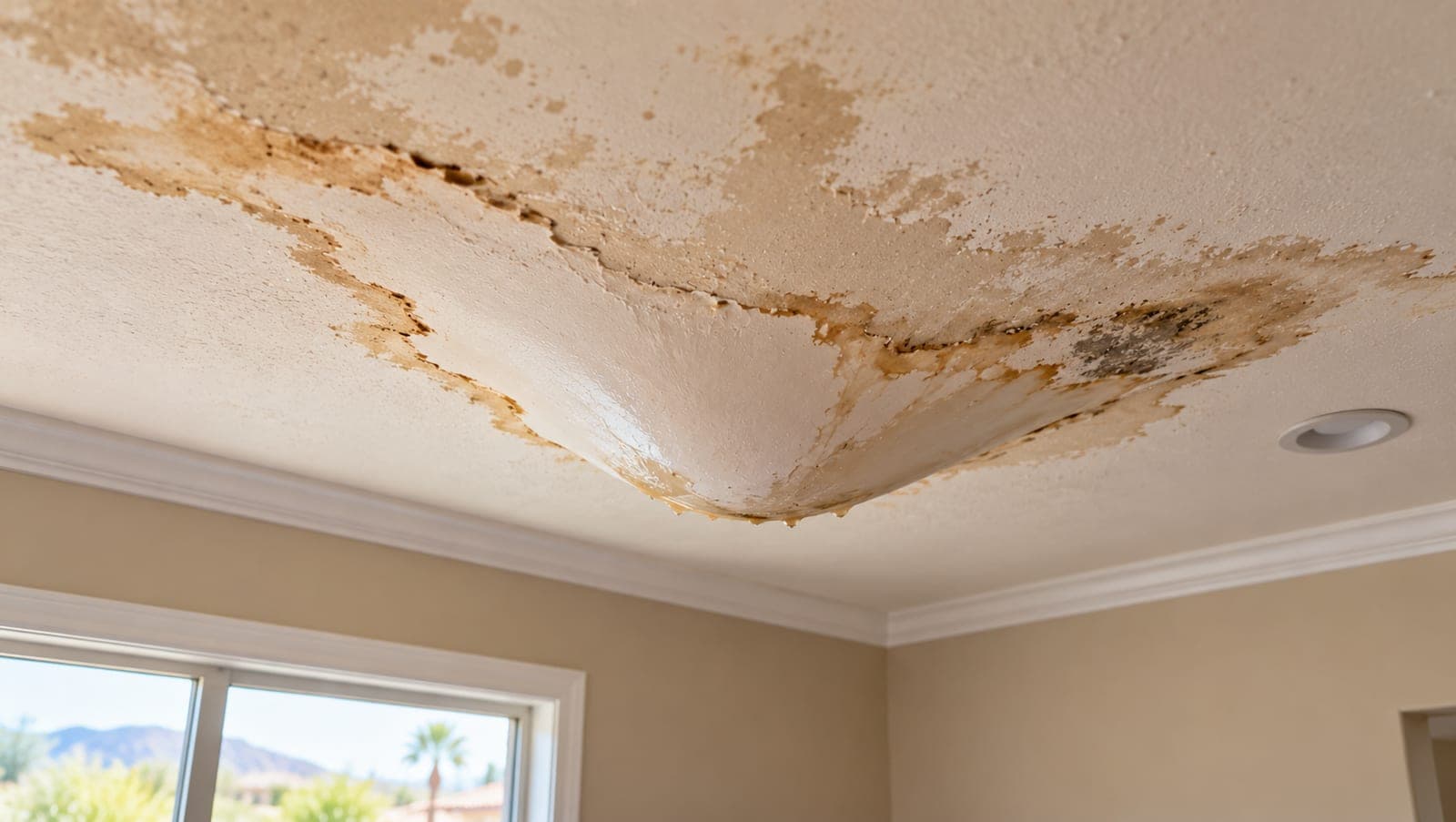
A sagging ceiling is the one drywall symptom that should change your evening plans. Gypsum board is strong in the plane of the sheet and weak everywhere else, and it holds to the trusses above it by a row of screws or nails spaced a foot or so apart. When the board gets wet it swells, softens, and gains weight all at once, and the paper face that gives it most of its tensile strength lets go of the core. The screws then hold a piece of soggy gypsum by its paper, and the board bellies down between the trusses. That belly is the last stage before the paper tears through.
Phoenix supplies the water from above in three reliable ways. Monsoon rain arrives sideways and finds cracked tile, failed underlayment, and the flashing around vents and skylights. Air handlers live in the attic or a hall closet, and their condensate lines, which carry gallons a day in July, clog with dust and algae and overflow the drain pan onto the drywall below. On a two-story house the upstairs bathroom sits directly over the ceiling that is sagging, and a supply line fitting or a tub drain that weeps a little each day is enough. The attic heat, which can top 130 degrees, also cooks adhesives and dries out lumber, so a ceiling that was marginal when it was built has less margin each summer.
The good news is that a sag is unambiguous in a way a crack is not. There are only a few causes, they are easy to tell apart, and the checks below take a few minutes from the floor and the attic hatch. The one instruction that matters most comes first: if the sag is wet, keep people, pets, and furniture out from under it until it is looked at. A saturated ceiling section can come down in one piece, and it does not announce the moment.
Likely causes, ranked
- 1
Water from the roof, the AC, or a pipe above
most commonWet drywall sags. This is the cause behind most ceiling bellies in the Valley and the one that makes a sag urgent. The signs are a stain on or near the belly, which may be faint tan or an obvious brown ring, paint that has blistered or is dripping, a damp or cool feel at the edge of the sag, and a location that names the source: under a roof valley or a skylight, below the air handler closet, or beneath an upstairs bathroom or laundry. In summer the AC is the first suspect. In August, after a storm, the roof is. If water is actively dripping, the sag is a bucket problem tonight and a drywall problem tomorrow.
- 2
Fasteners letting go or too few of them
commonOlder Phoenix homes often have ceilings nailed rather than screwed, and nails work loose as trusses flex through decades of heat cycles. Newer homes sometimes have half-inch board on trusses set 24 inches apart with a light screw pattern, which is within code but leaves little reserve. The board bellies between the trusses in a gentle pillow shape, dry, with no stain, often with a row of nail pops along the truss lines on either side of the sag. It tends to show first in large rooms, hallways, and garages. It is not an emergency, but a ceiling that has begun to pillow is a ceiling that will pillow more.
- 3
Wet or heavy insulation and attic storage
commonCeiling drywall was not designed to carry anything but itself. Blown insulation that has been soaked by a roof leak can weigh several times its dry weight and sit on the board until it bellies. Boxes stored between the trusses do the same thing without water. The tell is a sag that is localized to one bay between two trusses, sometimes with a straight edge where the truss holds the board up, and an attic check that finds compressed, matted insulation or somebody's holiday decorations sitting directly on the drywall.
- 4
Adhesive and paper failure from heat and age
less commonSome ceilings were hung with construction adhesive and a minimal fastener pattern, and decades of attic heat dry the adhesive to powder. Some older board has simply reached the end of its paper. This sag is broad and even rather than a single belly, dry, on an older home, and often accompanied by texture that has begun to release in sheets and a fine dust on horizontal surfaces below. It is a refastening job at best and a replacement job when the paper has let go of the core.
- 5
Framing that has moved or been cut
less commonOccasionally the drywall is fine and the truss above it is not. A truss chord cut by a previous owner to fit an attic ladder or a duct, a truss that has split, or a ceiling joist that has rotated will let a whole line of ceiling drop. The sign is a sag that follows a straight line across the room rather than pillowing between trusses, or a ceiling that is visibly lower on one side of a room than the other. That finding is for a structural engineer, and a drywall repair should wait until the framing has been assessed.
Check it yourself in ten minutes
- 1Look before you touch. From the doorway, note whether the sag is a single belly between two trusses, a broad even dip, or a straight line across the room. Photograph it with the date so you can tell whether it is changing.
- 2Look for water signs at the edges of the sag: a tan or brown ring, blistered or dripping paint, a dark spot, or a wet sheen. Hold the back of your hand near the surface; a wet ceiling often feels cool.
- 3Find the room above. Bathroom, laundry, air handler closet, or roof. If it is the AC, check the drain pan and the condensate line outlet outside; a pan with standing water or a line that has not dripped in a hot week is your answer.
- 4If it is dry, press lightly at the edge of the sag with a broom handle, not the center. A dry pillow moves slightly and springs back; soft, mushy give means the board has been wet even if the stain has not shown yet.
- 5Open the attic hatch and look with a flashlight, staying on the framing. Wet or matted insulation, boxes stored between trusses, a stained roof deck, or a drain pan that is overflowing each identify the cause from above.
- 6Check the rest of the ceiling with a raking flashlight for a row of nail pops or a second belly. One sag is a local problem. Several across the room is a fastening or age problem across the whole ceiling.
The fix
Refasten a dry sag to the trusses
Board that is dry and sound is drawn back tight to the framing with screws set on the truss lines, then the screw heads are finished and the texture repaired. Caught early, a loose ceiling is a modest repair rather than a replacement.
Sagging Ceiling Repair
Dry, cut out, and rebuild after a leak
Wet board does not recover its strength. The leak is stopped, the wet section and the insulation above it are removed, the framing is metered dry, and new board goes in with backing on every cut edge. The Bleuwave family includes licensed plumbing and HVAC when the source is a pipe or a condensate line.
Water-Damaged Drywall Repair
Repair the ceiling and match the texture overhead
Once the board is secure or replaced, the seams are taped, the knockdown or popcorn is matched, the stain is sealed, and the ceiling is painted edge to edge. The repair is finished so that no one looks up at it again.
Ceiling Drywall Repair
Replace the section when the paper has let go
A broad sag on an older ceiling where the face paper has separated from the core, or where the texture is releasing in sheets, is past refastening. The affected area is replaced to the nearest truss centers and finished as new.
Drywall Replacement
When to stop diagnosing and call
Call now if the sag is wet, stained, dripping, or soft, or if you found standing water in the attic. Bleuwave Handyman offers same-day and after-hours service inside a 35-mile radius of Phoenix for exactly this situation, and the visit starts with stopping the water and metering the board, not with a bucket of compound. If the sag is dry and has been there a while, call this week rather than this season; a pillowing ceiling does not tighten itself, and refastening it is a far smaller job than replacing what falls. If the sag follows a straight line across the room or the ceiling is lower on one side than the other, tell us that on the phone, because that description belongs to a structural engineer first and we will help you get one.
More questions on this one
Will a sagging ceiling fall?
A wet one can, and it gives little notice. Saturated drywall loses its grip on the fasteners and can come down in a single section with the wet insulation on top of it. Stay out from under a wet sag, catch the drip, and get it looked at the same day. A dry sag from loose fasteners is far less likely to fall but grows worse with every season of truss movement.
Will refastening a sagging ceiling actually hold?
Yes, if the board is dry and the paper is still bonded to the core. The board is pressed to the trusses and screwed on a tight pattern, then the screws are finished and the texture repaired. If the board has been wet, it will not hold a screw reliably and the section should be replaced.
Why is my ceiling sagging in the summer with no rain?
Check the air conditioner. The condensate line carries a surprising amount of water on a hot day, and when it clogs with dust and algae the drain pan overflows onto the ceiling below. A safety switch should shut the unit off, but not every system has one that works. A ceiling sag below the air handler or a hall closet in July is the AC until proven otherwise.
Should I poke a hole in the sag to let the water out?
If water is pooled above the drywall and actively dripping, a small hole at the lowest point of the belly, with a bucket beneath it, relieves the weight and can keep the section from tearing loose. Use a screwdriver, stand to the side, and expect more water than you think. Then leave the rest for the repair. Do not do this if you cannot identify what is above the ceiling.
Does insurance cover a sagging ceiling?
It depends on the cause. A sudden event, such as a storm that opened the roof or a pipe that burst, is often covered, and the ceiling repair is frequently included even when the roof or pipe itself is not. Gradual leaks, roof wear, and long-neglected damage are usually excluded. Photograph the sag, the stain, and the source before anything is removed, and keep the moisture readings and the estimate.
Related questions and reading
Elsewhere on the site
Services and reading that follow naturally from this diagnosis.
Still not sure what you are looking at?
Browse every question in the Repair Hub, or skip the reading and have a licensed pro look.