
Diagnosis · Phoenix Metro
Why do drywall cracks keep coming back?
Short answer
Drywall cracks come back because the last repair covered the crack instead of reinforcing it, or because the joint moves with the seasons and the repair was rigid. Spackle, caulk, and paint have no strength across a moving joint. A crack that returns needs tape bedded in setting compound, and a crack at the ceiling line in a Phoenix home usually needs a repair that floats with truss movement rather than one that fights it.
Medium urgencyA crack that reopens in the same hairline each season is a nuisance, not an emergency, and a proper taped repair ends it. Treat it as urgent if each return is wider than the last, if a step has developed between the two sides, or if new cracks are appearing near it. Repeated failure with growth is the signature of active movement, and the third return is the right time to find out why.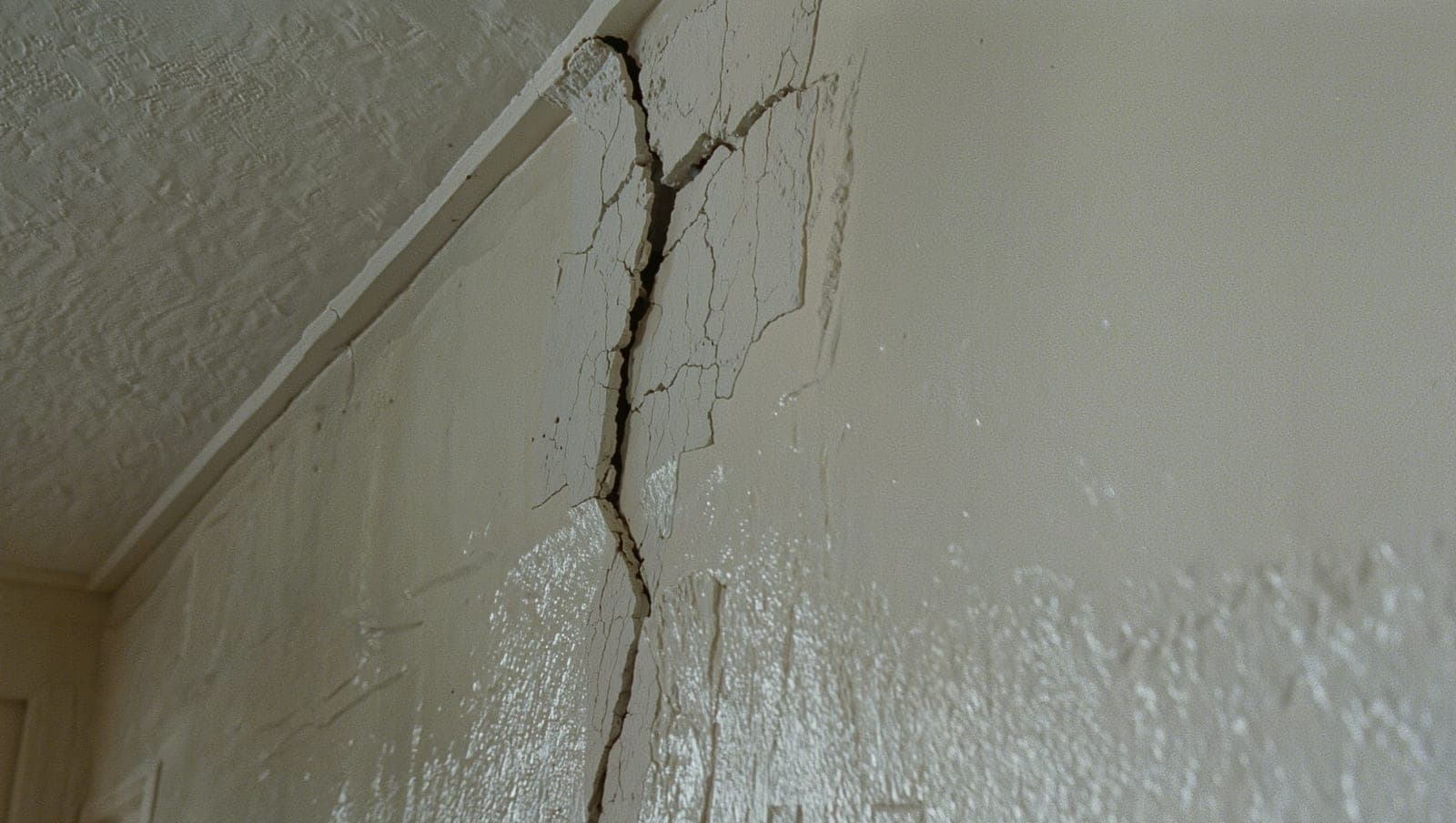
The second time a crack comes back, most people blame the paint. The third time, they blame the house. Both are wrong in an instructive way. A returning crack is a repair that was designed for a wall that holds still, applied to a joint that does not. The wall is doing exactly what it did before the repair; the repair simply was not built to move with it.
This matters in Phoenix more than in most places because the movement here is reliable. A slab on desert soil shifts a little with every wet season. Trusses lift every May and settle every October. A newer house shrinks through two summers. None of that stops because a crack was filled. So the question on this page is not why the wall cracked, which the previous page covers, but why the fix failed, and the answer usually comes down to what was put in the crack and whether anything was done about the tape underneath.
There is a smaller group of returning cracks that are worth taking more seriously. A crack that comes back wider each time, or in new places, or that has begun to show a step between its two sides, is not a repair failure. It is a symptom that outlasted several repairs, and it deserves a different professional. The checks below are meant to tell those two situations apart before another gallon of paint is spent.
Likely causes, ranked
- 1
The last repair was filler, not reinforcement
most commonLightweight spackle, painter's caulk, and a skim of compound with no tape under it are surface treatments. They bond to the two sides of the crack and then tear the moment those sides move, which they will. You can recognize this cause without a tool. The crack reopens along precisely the old line, sometimes with a faint ridge on either side where the filler was feathered, and the paint over it is intact except at the hairline. Scrape at the edge with a fingernail and soft white spackle comes away in crumbs. A repair that had tape in it does not fail this neatly; it bubbles or lifts along a length instead.
- 2
The joint moves seasonally and the repair was rigid
commonTruss uplift is the textbook case. The joint at the top of an interior wall opens in the dry heat of late spring and closes after the monsoon, every year, for the life of the roof. Any repair that bonds ceiling to wall across that joint is guaranteed one season of service. The signs are timing and location. The crack is at the ceiling line or in a ceiling corner, worst on interior walls near the middle of the house, visibly wider in June than in January. If you have photographs from different months, compare them. A crack that breathes with the calendar is not a crack to be glued shut.
- 3
The original tape failed and was left in place
commonWhen seam tape releases from the wall, every repair applied over it is riding on a loose strip of paper. It looks fine until the wall moves and the tape shifts again. This crack is straight, follows a seam, and often returns as a long thin blister rather than a clean line. A flashlight held flat to the wall shows a slight raised band the width of the tape. Press it and it gives with a soft crackle. The only durable repair removes the loose tape for the full length of the failure and starts over.
- 4
Two materials meeting that move at different rates
less commonDrywall butted to interior stucco, to a concrete block wall, to a wood beam, or to a steel header cracks at the junction because the two sides expand and contract on different schedules. Arizona houses have more of these seams than most, especially older block homes with furred drywall and additions where new framing meets old. The crack is exactly at the change of material, runs the full length of the joint, and reopens no matter what is applied. It is fixed by treating the junction as a control joint, not by pretending it is a seam.
- 5
The movement is ongoing and getting worse
less commonA crack that returns wider, longer, or with new companions each time is reporting movement that has not finished. Water is the usual culprit here: a drip irrigation line soaking one side of the stem wall, a downspout dumping against the foundation, a slab leak swelling the soil under one room. The signs are a crack that has changed shape rather than merely reopened, a step developing between its two sides, and other symptoms arriving in the same corner of the house, such as a door that no longer latches or a floor tile that has cracked. This is the one cause on the list where the drywall is the least important thing in the room.
Check it yourself in ten minutes
- 1Compare the crack to the last repair. If it reopened exactly on the old line and the surrounding paint is sound, the last fix was filler. If it has lifted along a length as a blister, the tape underneath has failed.
- 2Scrape a small spot at the edge of the crack with a fingernail or a putty knife. Soft, chalky material that crumbles is spackle. Hard gray-white material is setting compound. Paper visible in the crack is tape that was never removed.
- 3Check the timing. If you have photographs or memory of the crack across seasons, note whether it is wider in early summer than in winter. Seasonal breathing at the ceiling line points to truss uplift.
- 4Look at the location relative to the house. Cracks on interior walls near the center of the house, at the top of the wall, are truss territory. Cracks at exterior openings or at the junction of two wall materials are settling or a control joint.
- 5Measure the width with a feeler gauge, a credit card, or a pencil mark at each end, and photograph it with the date. In a month, measure again. A crack that returns but does not grow is a repair problem. A crack that returns and grows is a movement problem.
- 6Walk the outside of the wall. Look for irrigation emitters within a few feet of the stem wall, a downspout with no splash block, wet soil in a dry week, or a crack in the stucco that lines up with the one inside.
The fix
Open it, tape it, bed it in setting compound
The repair that ends a returning crack removes whatever was applied before, cuts the crack open to sound board, and embeds tape in compound that cures hard rather than drying soft. The joint is then feathered wide enough that the tape has no edge to print through. Done once properly, most settling cracks stay closed for years.
Drywall Crack Repair
Cut out the failed tape and re-embed
When the crack is riding on loose original tape, the tape comes out for the full length of the failure and new tape goes in. Compound over loose tape, however skillfully feathered, is a repair with an expiration date.
Drywall Seam & Tape Repair
Let a ceiling-line crack float
Truss uplift cracks are finished with a detail that fastens to the ceiling and floats over the wall, or hidden behind crown molding attached to the wall only. The movement continues; it simply happens somewhere the eye cannot see it.
Ceiling Crack Repair
Treat a material junction as a joint
Where drywall meets stucco, block, or a beam, the seam is finished with a flexible or expressed joint that expects the two sides to move apart. Rigid tape across a material change is a crack in waiting.
Stucco-to-Drywall & Interior Wall Repair
When to stop diagnosing and call
Call when the crack has returned twice under your ownership. At that point the experiment has been run and the result is in: paint and filler will not hold this joint, and the next repair should be a taped one. Call sooner, and describe what you found, if the crack has grown between returns, if a step has developed between its sides, or if you found wet soil, an irrigation line, or a downspout working against the foundation outside. Bleuwave Handyman will look at the crack and the history at a free estimate, repair the ones that are repair problems, and tell you when a returning crack should be seen by a foundation specialist or engineer before anyone touches the wall.
More questions on this one
Why does the crack come back even though I used caulk?
Paintable caulk stretches a little, which is why it feels like the right answer, but it has no bond strength into gypsum and it is being asked to bridge a gap that opens and closes for years. It peels from one side, the hairline prints through the paint, and now the crack has a rubbery edge that must be dug out before a proper repair. Caulk belongs at trim joints, not on drywall cracks.
Is a crack that keeps coming back a sign of foundation trouble?
Usually not. Most returning cracks are failed repairs over ordinary seasonal movement, and they return in the same hairline at the same width. The foundation signal is change: a crack that comes back wider, longer, or offset, with new cracks nearby, or with doors and floors in the same part of the house behaving differently than they used to. Growth is the word to watch for.
Can the crack at the top of my wall be permanently fixed?
If it opens every summer and closes every winter, the movement cannot be stopped, because it comes from the roof trusses reacting to the attic. What can be done permanently is to build the repair so the movement is hidden: a floating tape detail or crown molding fastened to the wall only. Rigid repairs at that joint have a one-year life expectancy.
How many times should I repair a crack before I worry?
Once, if the repair was a taped one done in setting compound. If that repair fails, something is moving more than a settling crack should, and the second visit should include a closer look at the cause. If the previous repairs were spackle and paint, they do not count as repairs; count from the first real one.
Will a new crack repair leave a visible stripe?
Not if the texture is matched and the paint is carried to a natural break. A returning crack has often been repainted in a slightly different sheen each time, which is why the area already looks patchy. A proper repair usually includes repainting the wall corner to corner so the whole surface reads as one.
Related questions and reading
Elsewhere on the site
Services and reading that follow naturally from this diagnosis.
Still not sure what you are looking at?
Browse every question in the Repair Hub, or skip the reading and have a licensed pro look.