
Diagnosis · Phoenix Metro
Why is there a brown spot on my ceiling?
Short answer
A brown spot on the ceiling is a water stain. Water reached the drywall, carried tannins from the paper and dust and rust from the attic, and left a ring where it dried. In Phoenix the usual sources are an overflowing air conditioner condensate pan in the attic, a roof leak that shows up after a monsoon storm, or a bathroom or water heater on the floor above. Find the source first. Sealing the stain is the last step, not the first.
High urgencyAn active stain is a leak you happen to be able to see. A dry, firm, unchanging stain is a paint job. You cannot tell which one you have from the floor, so the first ten minutes with a stepladder decide the next ten days. Anything damp, growing, or bulging gets treated as a running leak until proven otherwise.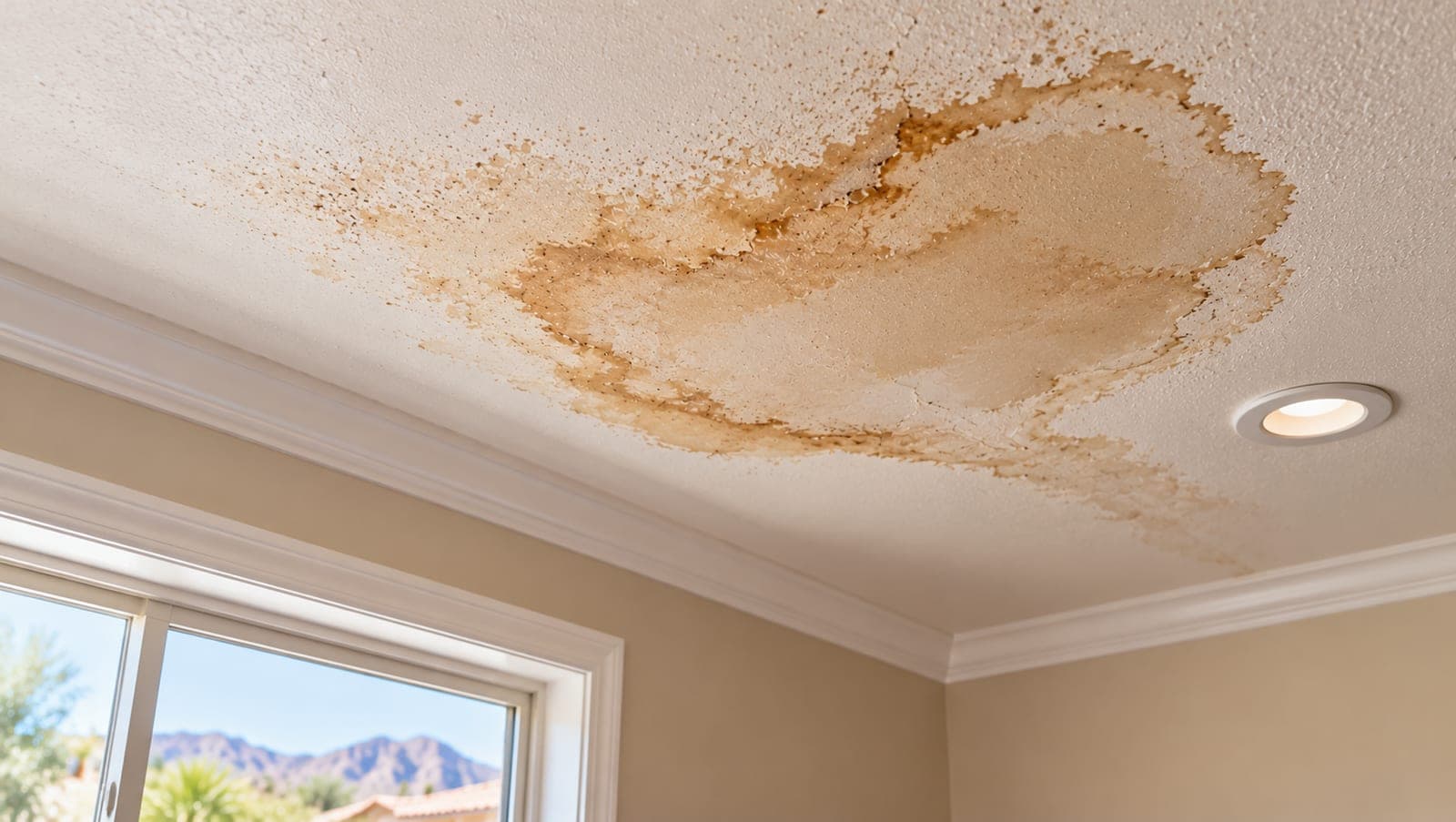
The ring appears overnight, or it has been there for a year and you have stopped seeing it. Either way it is a message from the space above the drywall, and the ceiling is only the messenger. It is a messenger that cannot be painted into silence, which is why most stains that get a quick coat of ceiling white come back through it within a season.
Phoenix ceilings get wet from three directions. The most common is the air handler in the attic. It pulls gallons of water out of the indoor air on a July afternoon and sends it down a condensate line that clogs with dust and algae. When the primary line clogs, the overflow pan catches the water, and when the pan fills, rusts through, or has no float switch, the ceiling below gets it. The second direction is the roof. Monsoon rain arrives sideways, works under tile, around vent pipes and skylights, and over the parapets of flat roofs, and it tends to travel along a truss before it drips, so the stain may be several feet from the entry point. The third is plumbing above: an upstairs shower pan, a toilet wax ring, a supply line routed through the attic, or in some houses a water heater up there with it.
The stain itself carries information. A single ring with a dark edge and a lighter center means one wetting that dried. Rings inside rings mean it has happened more than once. A line rather than a ring often follows framing. A spot that is soft, bulging, or damp to the touch is not a stain yet. It is a leak in progress.
Likely causes, ranked
- 1
Air conditioner condensate line or drain pan overflow
most commonThe stain sits under or near the air handler, often in a hallway or a closet ceiling, and it appears or grows in the hottest months when the unit runs hardest. It is usually round. Walk outside and look for a short PVC stub under the eave near the unit. If it is dripping, the primary drain is clogged and the secondary is doing the work. If the ceiling is stained, the pan has been overwhelmed or has failed.
- 2
A roof leak during monsoon season
commonThe spot shows up within a day of a storm and darkens with each one that follows. It lies below a roof valley, a vent pipe, a skylight, a satellite mount, or the parapet of a flat roof, though the drip point can be offset from the entry point by the length of a truss. Between storms it dries and stays put, which lulls people into waiting until September.
- 3
An upstairs bathroom or laundry
commonIn a two-story house, the stain is under a shower, tub, toilet, or washer, and it changes after those fixtures are used. A toilet wax ring that has failed leaves a stain that grows a little with every flush. A shower pan leaks only when someone is standing in it. Run the fixture, wait an hour, and touch the spot.
- 4
Plumbing or a water heater in the attic
less commonSome Valley houses route supply lines through the attic, and a few keep the water heater there. A pinhole from hard water or a fitting stressed by 140-degree attic heat drips steadily rather than seasonally. The stain grows regardless of weather or which fixture is used, and it may be far from any bathroom.
- 5
An old stain bleeding through paint
less commonThe leak was fixed years ago and the ceiling was painted with ordinary latex. Water-stain tannins migrate through latex the way a coffee ring comes through a paper napkin. This stain is dry, firm, the same size it was last month, and shaped exactly like the one that was painted over. It needs a stain-blocking primer, not a roofer.
Check it yourself in ten minutes
- 1Touch it from a stepladder. Damp or cool to the touch means active. Press gently with a fingertip. Any give means the board has been wet enough to lose its strength and will be replaced rather than sealed.
- 2Trace the edge lightly in pencil and photograph it. Check again in 48 hours, after the next storm, and after the next hot afternoon. A stain that grows is a leak. A stain that holds is a scar.
- 3Go outside and find the air conditioner's secondary drain stub under the eave. A drip from it means the primary condensate line is clogged and the system is one failure away from the ceiling.
- 4Map the stain against the floor plan above it. Under the air handler closet, under an upstairs bathroom, under a roof valley or a parapet: each location narrows the source to one trade.
- 5Note the timing. After rain points to the roof. During hot afternoons points to condensate. After someone showers upstairs points to plumbing. Constant and slow points to a supply line.
- 6If the attic is accessible and it is not midday in summer, look with a flashlight: wet insulation, rust on the drain pan, a dark trail down a truss, or daylight around a vent pipe.
The fix
Seal and repaint a dry, firm stain
When the board is dry, firm, and the source is fixed, the stain is locked down with a shellac- or oil-based primer-sealer and the ceiling is repainted, usually corner to corner so no touch-up halo shows in afternoon light.
Ceiling Water Stain Repair
Cut out and rebuild a soft or sagging spot
A stain that gives under a fingertip has failed as drywall. The wet area is cut back to sound board and to the joists, wet insulation is removed, the cavity is dried, and new board is hung and finished.
Water-Damaged Drywall Repair
Rebuild a larger ceiling section
When the stain covers a few square feet or the ceiling has bellied between joists, a proper overhead section rebuild is the right scope: 5/8-inch board where the original was 5/8, paper tape, setting-type compound, and a texture match.
Ceiling Drywall Repair
Match the ceiling texture
Knockdown, orange peel, and popcorn ceilings show a bad blend more than any wall does, because the light comes across them. The repair is textured to match before paint so the ceiling reads as one surface.
Ceiling Texture Repair
When to stop diagnosing and call
Call when the spot is damp, when it grew since you photographed it, when it gives under a fingertip, or when you found rust or wet insulation in the attic. Each of those means the ceiling is the least of it. Bleuwave Handyman is licensed, insured, and bonded, Veteran Owned & Operated since 2022, and the Bleuwave family includes licensed HVAC and plumbing companies, so a clogged condensate line or a failed wax ring gets fixed by the licensed trade while the handyman crew handles the ceiling. If the source is the roof, we tell you what we found and where. Same-day, next-day, and after-hours service across 35 miles of Phoenix, and the estimate is free. In monsoon season the calendar fills after every storm, so the call is worth making before the next one.
More questions on this one
Can I just paint over a brown water stain on the ceiling?
Only when three things are true: the board is dry and firm, the stain has not changed in weeks, and whatever caused it has been fixed. Then it needs a shellac- or oil-based stain-blocking primer before ceiling paint. Ordinary latex primer will let the ring bleed back through, often within a few months.
Why did a brown spot appear on my ceiling when it has not rained?
In Phoenix a dry-weather ceiling stain is almost always the air conditioner. The condensate drain clogs, the pan overflows, and the ceiling below the air handler gets wet on the hottest days of the year. The other dry-weather sources are upstairs plumbing and supply lines in the attic.
Why is the stain brown instead of gray or clear?
Water picks up color on its way through. It dissolves tannins from the drywall paper, carries attic dust and insulation dye, and brings rust from nails, ducts, and a corroding drain pan. The darker the ring, the more it has carried, which usually means more water or more trips.
Is a brown spot on the ceiling mold?
The brown ring itself is a mineral and tannin stain, not growth. Mold shows up as black, green, or gray specks or fuzz, often at the edge of a stain or on the back of the board where it stayed damp. A stain that smells musty or has dark speckling inside the ring should be treated as a mold question, and we have a separate page on telling the two apart.
How long before a stained ceiling comes down?
There is no fixed clock, and anyone who gives you one is guessing. The warning signs are a bulge, a sag between joists, a soft spot, or a crack running out of the stain. A ceiling with any of those is holding water it can no longer support. Stay out from under it, put a bucket down, and call.
Related questions and reading
Elsewhere on the site
Services and reading that follow naturally from this diagnosis.
Still not sure what you are looking at?
Browse every question in the Repair Hub, or skip the reading and have a licensed pro look.