
Diagnosis · Phoenix Metro
Why is my drywall bubbling?
Short answer
Drywall bubbles for three reasons: water has gotten behind the paint or into the board, the joint tape under the surface has lifted, or the paint was applied over a surface it could not bond to. A bubble in a straight line along a seam is tape, and a blotchy bubble near a sink, a window, a slab, or an air handler is water. A crisp bubble that peels to a clean, dry wall underneath is a paint failure.
Medium urgencyA dry tape bubble or a crisp paint bubble is a scheduled repair. A bubble that is soft, weeping, spreading, or accompanied by a stain is a leak in progress, and each day it runs the repair grows from a patch toward a section. Treat any bubble near a water source as active until you have proved otherwise, and check it again in the morning.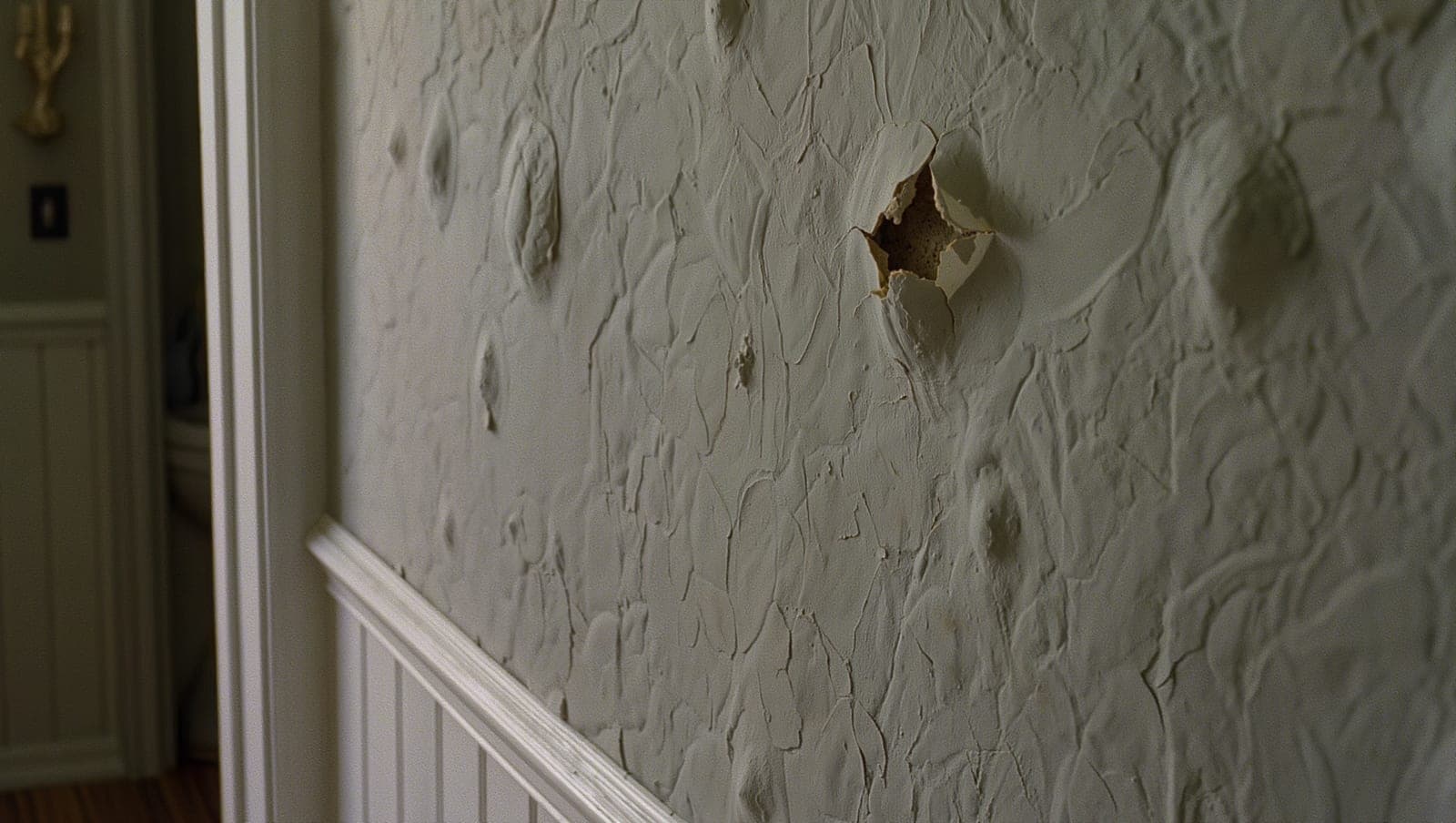
Bubbling is the wall lifting away from itself in layers, and which layer has lifted tells you the cause. Paint can lift from the primer. Primer and paint together can lift from the drywall paper. The paper can lift from the gypsum core. And the joint tape, with all its compound, can lift from the seam it was supposed to reinforce. Each of those looks like a bubble from across the room. Up close, with a fingernail and a flashlight, they look quite different, and the difference is the whole diagnosis.
In Phoenix, moisture is the first suspect even in a city where rain is rare, because the water that damages drywall here is rarely rain falling on the wall. It is a monsoon storm driving water through a stucco crack or a window frame, a condensate line from the air conditioner backing up in a hall closet, a supply line under the kitchen sink weeping onto the back of the wall, a slab that wicks ground moisture up into a wall with no vapor break, or a drip emitter that has been soaking the outside of a stem wall for a year. Water finds the wall from behind, and the first thing the room sees is a bubble.
The second suspect is the desert itself. Paint applied to a dusty wall, or to a west-facing wall at a hundred degrees, or over bare joint compound that was never primed, skins before it bonds and lifts at the first change of humidity. The third is workmanship at the seams, which is not a Phoenix problem so much as a fast-built-house problem, and the Valley has plenty of fast-built houses. The checks below sort the three in ten minutes, and the sorting matters, because a tape bubble is a morning's repair and a moisture bubble is a leak that has not finished.
Likely causes, ranked
- 1
Moisture behind the surface
most commonWater reaching the back of the drywall, or getting between the paint and the paper, lifts the surface as it tries to escape. This is the cause behind bubbling near any water source and behind most bubbling that is soft to the touch. You recognize it by shape and place. The bubble is irregular and blotchy rather than linear, often with a faint tan edge or a ring, and it sits low on a wall near the slab, under a window, behind a sink or toilet, on the wall shared with a shower, or on a ceiling below the air handler or an upstairs bathroom. Press it gently and it gives. Puncture it with a pin and it may weep. The paint around it may already be chalking or peeling in flakes. After a monsoon, check exterior walls; in July with no rain, check the AC and the plumbing.
- 2
Joint tape that never bonded
commonPaper tape bedded in too little compound, or over a coat that had already skinned, sits on the wall in a pocket of air. It looks fine under paint until the wall flexes or the humidity changes, and then the pocket shows as a long, narrow blister. You recognize it by geometry. The bubble is straight, runs along a seam line four feet from a corner or at the height where two sheets meet, and is roughly the width of the tape. Under a flashlight held flat it shows as a raised band. Press it and it crackles like paper, because it is paper. It is dry underneath, and the wall around it is sound. Sometimes a hairline crack runs down the center of the blister.
- 3
Paint applied over a surface it could not grip
commonPaint bonds to a clean, primed, cool surface. Phoenix offers dust on every horizontal and vertical surface, walls that reach oven temperatures in afternoon sun, and a lot of joint compound that was painted without primer. Any of those gives you paint that skinned before it stuck. The bubbles are crisp, often small and numerous, sometimes in the shape of the roller pattern or concentrated on a west or south wall. Pop one with a fingernail and the paint film peels away cleanly to reveal dry primer, dry paper, or bare compound with no stain. There is no water in the story. This is the easiest cause to fix and the most annoying to look at.
- 4
Face paper separating from the core
less commonDrywall that was wet once and dried, or that was sanded through the paper during a previous repair, can shed its face paper in a broad, loose sheet under the paint. The bubble is large, soft, and papery, and it does not follow a seam. Tap it and it sounds hollow. Peel the edge and you find gray gypsum with a fuzzy surface rather than sound paper. There may be an old stain nearby from the event that started it. Board in this condition will not hold new paint or compound and is a candidate for cutting out rather than skimming.
- 5
Slab or stem wall moisture wicking up the wall
less commonSome Phoenix houses were built without an effective moisture break between the slab and the bottom plate, and ground moisture, along with the minerals in it, migrates up into the first foot of drywall. Irrigation against the exterior wall and a hose bib that drips make it worse. The sign is bubbling and a white, crusty mineral bloom at the very bottom of an exterior wall, just above the baseboard, sometimes with a swollen or discolored baseboard beneath it. The bubble is chronic rather than sudden and returns after repainting. It is solved by managing the water outside and then rebuilding the bottom of the wall.
Check it yourself in ten minutes
- 1Press the bubble gently with a fingertip. Papery crackle over a firm wall is lifted tape. Soft give is moisture. A crisp film that flexes over a hard surface is paint.
- 2Look at its shape under a flashlight held flat to the wall. A straight band the width of a strip of tape is a seam. An irregular blotch is water. Small crisp blisters in a roller pattern are paint.
- 3Puncture the bubble with a pin at its lowest point, with a paper towel ready. Water or dampness means an active leak. Dry air means tape or paint.
- 4Peel a small edge with a fingernail. Paint that lifts cleanly to dry primer or paper is a bond failure. Paper that comes with it, showing gray core, is delaminating board. A stain under the paint is water, old or new.
- 5Check the other side of the wall. Under the sink, behind the toilet, in the shower wall, in the AC closet drain pan, and outside at the hose bib, the irrigation line, and the stucco below the window. Wet soil in a dry week is a finding.
- 6Note the season and the weather. Bubbling that appeared after a monsoon storm on an exterior wall is roof or stucco intrusion. Bubbling in June on a ceiling or an interior wall with no rain in weeks is the air conditioner or a pipe.
The fix
Cut out the lifted tape and re-embed it
A dry, straight bubble along a seam is opened, the unbonded tape is removed for the full length of the lift, and new tape is bedded in setting compound and feathered flat. Skimming over the bubble traps the air pocket and moves the problem one coat outward.
Drywall Seam & Tape Repair
Stop the water, dry the board, rebuild what was wet
A moisture bubble is a leak with a symptom. The source is found and fixed, with the licensed plumbing and HVAC companies in the Bleuwave family when it is a pipe or a condensate line, the board is metered, and the section that was wet is dried or cut out and replaced. Painting over it is a countdown.
Water-Damaged Drywall Repair
Strip the failed paint and refinish the area
Paint bubbles with a dry wall beneath are scraped to a sound edge, the surface is cleaned of dust, bare compound is primed, the edges are feathered with compound, and the area is textured and repainted. The wall is painted to a corner so the sheen matches.
Drywall Patch Repair
Replace board whose paper has let go
When the face paper has separated from the core over a broad area, or the bottom of a wall has been wicking moisture for years, the affected section is removed to the studs and new board is installed, taped, textured, and painted. Compound over loose paper does not have anything to hold onto.
Drywall Replacement
When to stop diagnosing and call
Call the same day if the bubble is wet, weeping, or spreading, if there is a stain with it, or if it sits below an air handler or an upstairs bathroom. A moisture bubble grows by the day, and finding the source early is the difference between a patch and a wall. Bleuwave Handyman meters the wall, traces the water, and brings in the licensed plumbing, HVAC, or electrical company in the Bleuwave family when the source is theirs. For a dry tape bubble or a paint failure, call when you are ready to have it done once, with the tape replaced or the paint stripped and the texture matched so the repair does not show. If the bubble comes with black or green spotting and a musty smell over an area larger than a few square feet, we will tell you when a remediation specialist should see it before we open the wall.
More questions on this one
Is bubbling drywall always a sign of a leak?
No. Many bubbles turn out to be lifted joint tape, which is dry and follows a straight seam, and others are paint that never bonded to a dusty, hot, or unprimed surface. The pin test settles it in a minute: puncture the lowest point of the bubble and see whether anything comes out. Dry air is a finishing problem. Dampness is a leak.
Why is the drywall bubbling at the bottom of my wall above the baseboard?
Water is coming up rather than down. Ground moisture wicking through the slab and bottom plate, irrigation soaking the outside of the stem wall, or a dripping hose bib will all show as bubbling and a white mineral crust in the first foot of an exterior wall. Fix the water outside first, then rebuild the bottom of the wall, or the bubble returns after every repaint.
Can I just pop the bubble and paint over it?
If it is a paint bubble over a dry, sound wall, yes, after scraping to a firm edge, cleaning the dust, priming bare spots, and feathering the edge with compound. If it is tape, the tape must come out or the bubble returns along the same line. If it is moisture, painting over it seals water into the wall and the paint fails again within weeks, often with a stain this time.
Why did my wall start bubbling after the monsoon?
Monsoon rain arrives sideways and under pressure. It finds hairline cracks in the stucco, gaps at window frames, failed sealant at the roof-to-wall flashing, and parapet caps, and it wets the back of the drywall on exterior walls. The bubble appears a day or two later as the water works toward the room. Check the stucco and the window outside, and expect the same spot to bubble again in the next storm until the entry point is sealed.
Is bubbling drywall dangerous?
The bubble itself is not. What it may indicate can be. A moisture bubble means water has been in the wall long enough to lift the surface, and damp drywall in a closed wall cavity is the environment mold prefers. If the bubble is near wiring or an outlet, water and electricity share the same space. Get the source found quickly. The wall repair is the easy part.
Related questions and reading
Elsewhere on the site
Services and reading that follow naturally from this diagnosis.
Still not sure what you are looking at?
Browse every question in the Repair Hub, or skip the reading and have a licensed pro look.