
Diagnosis · Phoenix Metro
Should damaged drywall be patched or replaced?
Short answer
Patch it when the damage is local, the board around it is firm, and the cause is gone. Replace the section when the drywall is soft, sagging, moldy, or has failed in the same spot before. Replace the wall when the patches would add up to more area than the wall left between them. A palm and a tape measure settle most cases in under a minute.
Low urgencyThe decision itself is not urgent, and a firm wall with a hole in it can wait for a convenient week. What can be urgent is the reason you are asking. If the damage is soft, damp, sagging, or growing, the water behind it is on a clock and the patch-or-replace question answers itself along the way.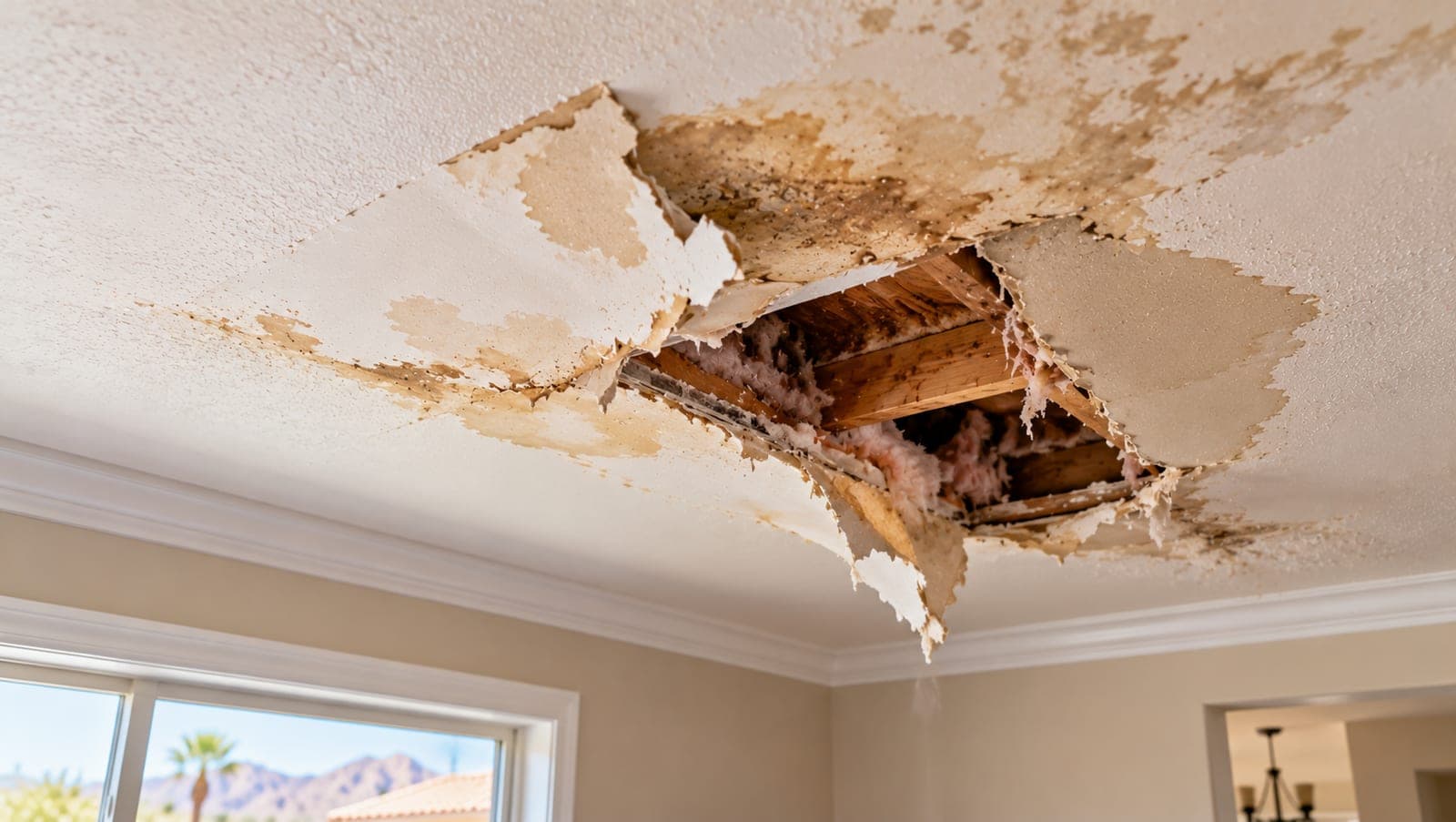
This is the short version. The long version, with the decision table and the arithmetic, lives in our repair-versus-replace guide, and it is worth the eight minutes before a large job. But most people asking this question are standing in front of one hole, one stain, or one crack, and they want a verdict, not a framework. Here is how to reach one.
The verdict turns on the kind of damage more than the size of it. Impact damage is almost always a patch. Water damage depends entirely on what your palm finds. Cracks are a patch the first time and a conversation the third. Deterioration from heat, pests, or fire is a replacement no matter how small it looks. And a wall that has been patched four times is not a wall with four patches. It is a patch with some wall around it.
Likely causes, ranked
- 1
Impact damage: a doorknob, a chair back, a moving day
most commonA hole, dent, or gouge with firm board all around it and a cause that is not coming back. This is a patch, whether it is the size of a quarter or a dinner plate. Past dinner-plate size it becomes a section repair with new board cut to the studs, which is still a patch in cost and spirit. Recognize it by its edges: clean, dry, and surrounded by wall that does not move.
- 2
Water damage: a stain, a bubble, a soft spot
commonThe one category where the wrong call is common. Press around the mark with your palm. Firm, dry, first-time stain with the source fixed is a patch: seal, texture, paint. Soft, sagging, a stain that came back after painting, or any mold means the board is finished and the section is replaced past the wet boundary. The size of the stain is nearly irrelevant. The firmness of the board is everything.
- 3
Cracks: settling, seams, corners
commonA first-time crack over a door, along a seam, or down from a ceiling corner is a patch done properly, meaning tape and compound rather than caulk. A crack that has reopened on the same line after a taped repair is telling you about the slab or the framing, and the answer is to have that looked at and then replace the section with a detail that lets the wall move.
- 4
Deterioration: heat, pests, smoke, age
less commonBoard that crumbles at a screw, paper that has gone brittle in an unconditioned garage, drywall behind which termites or rodents have been working, or anything that has taken smoke. The damage is in the material, not on it. These are replacements, after pest control or the fire cleanup has done its part, because there is nothing sound to patch to.
- 5
Previous repairs that show
less commonRidges in raking light, texture that does not match, a lump where compound was piled over compound. Each attempt adds thickness and makes the next match harder. A wall with three or more visible old repairs is usually cheaper and always better as a fresh sheet with texture from corner to corner than as a fourth try.
Check it yourself in ten minutes
- 1Press the board with your palm in a ring around the damage. Firm everywhere is a patch. Soft anywhere is a replacement, and the soft area, not the visible damage, sets the size of the cut.
- 2Measure the longest dimension of the damage. Under about a foot is a patch. Over that is a section repair with new board. When the affected area is most of the wall, the wall is the repair.
- 3Count. More than three or four significant damage points on one wall, and a single sheet is faster, cleaner, and often no more expensive than a row of patches.
- 4Rake the wall with a flashlight held flat. Ridges, halos, and texture changes are previous repairs. Add them to the count.
- 5Ask whether the cause is finished. A missing door stop, a leak that was never found, or a crack that moves with the seasons will undo a patch. Fix the cause or the patch is temporary.
- 6Note the texture and the light. Hand-troweled texture, high-gloss paint, or a ceiling lit from a west window raises the bar for an invisible patch and tips a close call toward replacing the section.
The fix
Patch it
Local damage on firm board: holes, dents, gouges, first-time cracks, and dry stains. Backed patch or section piece, tape, compound, texture, and paint. The wall forgets.
Drywall Patch Repair
Replace the section or the wall
Soft, sagging, crumbling, pest- or smoke-damaged board, repeat failures, and walls carrying more patches than wall. New board hung to the studs, finished, textured edge to edge, and painted.
Drywall Replacement
Wet damage, handled in the right order
When water is the cause, the leak is fixed by licensed plumbing or HVAC in the Bleuwave family, the wet board comes out to dry material, the cavity dries, and the rebuild follows. The patch-or-replace call gets made with a moisture meter, not a guess.
Water-Damaged Drywall Repair
Match the texture either way
A patch lives or dies on the texture blend. A replaced section gets fresh texture that has to meet the old at the edge. Orange peel, knockdown, and hand textures are matched from a test board before anything is painted.
Texture Matching
When to stop diagnosing and call
Call when the palm test fails, when you have counted past three, when the same spot has been fixed before, or when you would rather have someone else make the call and write both numbers on one estimate. Bleuwave Handyman is licensed, insured, and bonded, Veteran Owned & Operated since 2022, and we price the patch and the replacement side by side when it is close. When the answer is patch, we do not sell you a wall. Same-day, next-day, and after-hours service across 35 miles of Phoenix, and estimates are free. Press on the wall before we arrive and tell us what you felt. It changes what goes on the truck.
More questions on this one
How big a hole can be patched instead of replaced?
Up to about a dinner plate, a backed patch works. Larger than that, the repair is a section piece cut to the nearest studs with new board, which is still priced and finished as a patch. Only when the section approaches the size of the wall does replacing the wall make more sense.
Does a water stain mean the drywall has to be replaced?
Not by itself. A dry, firm, first-time stain with the source fixed is sealed and repainted. It is replaced when the board is soft or sagging, when the stain has returned after being painted, or when there is mold. The full water-damage rule is in the repair-versus-replace guide.
Can you replace just one section rather than the whole wall?
Yes, and it is the most common form of replacement. The damaged area is cut back to sound board and to the centerline of the studs on each side, a new piece is screwed in, and the seams are taped and finished. Whole-wall replacement is reserved for damage or patch counts that make a section cut pointless.
Will a replaced section look different from the rest of the wall?
Not if the texture is matched and the paint is carried to a natural break. A replaced section gets the same texture as its neighbors, blended past the seam, and the wall is painted corner to corner rather than spot-touched. In raking light a good section replacement is indistinguishable from the original.
Is it cheaper to patch several holes or replace the wall?
Patches are priced each. A wall is priced once. Somewhere around three or four significant repairs on one wall, the sheet wins on cost and always wins on finish. Our cost guide has the framing for property managers turning units, where that math comes up every month.
Related questions and reading
Elsewhere on the site
Services and reading that follow naturally from this diagnosis.
Still not sure what you are looking at?
Browse every question in the Repair Hub, or skip the reading and have a licensed pro look.